“Jen agreed to be filmed to talk about her lived experience of a personal health budget. Jen not only articulated the positive outcomes of the experience, but was able to provide some valuable insight into how to make the process better. Jen comes from a marketing background and was also able to review the film with me to arrive at a meaningful and useful end product.”
Tina Brown, Commissioning Manager
I recently completed some filming with a great team at South Derbyshire CCG who commissioned my personal health budget. The Senior Commissioning Manager, Tina Brown, asked to film my partner Mark and I following the overwhelming success of my recovery following the Sensory integration Occupational Therapy. Personal Health Budgets for mental health that have used their award innovatively are quite rare, even nationally, so any opportunity to highlight positive and successful personalisation of care must be taken.
The film was recently released on the CCG’s personal health budget landing page. I was really pleased to not only be able to speak about my experiences but also helped to create the final editing for the film. Enough footage was taken for a shorter public facing version and a longer adaptation for internal training. We also hope for it to be used more widely for NHS England in the future.
Today was the section of my research module that detailed the experiences of voice hearers, via a person-centred construct that applied meaning to their experiences, moving it away from a pathologised symptom of illness. Instead, voices are expressed as a natural response to traumatic events, often appearing at times of high stress and when reframed in this way, newly understood as facets of unexpressed emotion or aspects of abusive memories too traumatic to find voice.
As I read the dimensions around which the voice constructs were created I began to perceive similarities with my own experience.
To be clear, I had experienced very obvious psychotic symptoms, sometimes as a result of sleeplessness, sometimes brought about because of recreational drug abuse and in one particularly terrifying episode brought about by taking Citalopram, a chorus of continuous chanting ‘Kill yourself, die. Kill yourself, die. Kill yourself, die” that lasted a week and stopped me from sleeping, driving me to follow their instruction from sheer desperation. These I could very clearly identify as voices that emanated outside of myself, as there was an ‘other’ quality to them.
There were always the other voices though. The ones who had been with me since I was a child.
Multiplicitous conversations, involving people family members from my past with whom I had rocky relationships and even different aspects of myself as ages from times past, the present and projected back from the future into my present experience. In my mid-twenties I was subject to three years of domestic violence and abuse. During this period a host of voices emerged, all facets of me at different stages of my life who struggled with the life experiences they dealt with. The four-year-old bruised from her parent’s divorce. The eight-year-old struggling to come to terms with the sexual abuse she experienced from a visitor to her home. The fourteen-year-old, undiagnosed autistic girl-woman adrift in a sea of peer bullying and social distress. The seventeen-year-old with a cocaine habit, spending as much time as possible away from home because we/ she couldn’t hack the tension in the family. They were all joined by my current (then) self and future manifestations from an imagined future, where you weren’t living in daily fear of being raped, or beaten or made to feel more worthless than a piece of shit.
We got together and told each other everything would be okay in the end. My then 25 year old self would comfort the eight year old, explaining that everything would be okay and you/she would stop feeling so dirty. We all talked to our future manifestation about what being okay was like, as a life and an experience. The future self had a little girl with her, who listened and didn’t say much, but whose presence, as a loved and cherished being was obvious. Her comments frequently centred around just who all these other people, were and why the other little girls were so sad.
Mostly, my voices were familiar and friendly, supportive and provided a much-needed sense of solidarity. Even the critical angry voices, who I often identified with family members, were just part of my inner landscape. We conversed and I listened. They helped me to process situations I needed to prepare for or explore different scenarios that might happen. They helped me to develop the social skills I needed to deal with aggressive or confrontational experiences that happened in the real world – so the next time something similar happened I had more of the right words to defend myself with.
My voices have been with me so long that I barely even think about them, but I realised with horror this afternoon that if I had a negative response to these manifestations I would possibly have been in line for a diagnosis of psychosis, with all the joys of being filled chockfull of pills. Even reading the other accounts of individuals who reframed their own voice hearing experiences into something more positive jolted me. Their original perspective was so negative. Had I been wrong all along? Had the experiences I have had been latent expressions of mental ‘illness’ that had gone unaccounted for? Was I at risk of another relapse despite only being discharged from secondary services last month?
I guess the best way to describe it is like seeing trees or clouds every day for your life. Then one day you read that seeing trees or clouds is actually a sign of profound illness, a serious and stigmatising experience, only it never felt like that to you. Seeing them was quite nice a lot of the time, and even when it was harder like if there were thunder and lightning, it was never anything you couldn’t deal with.
Notwithstanding my total rejection of the medical model of recovery and all the self-limiting meaning it gathers around you, the power of the internalised stigma affects me still. I was worried, genuinely worried, that I was going to get ill again, and that this time I wouldn’t be able to cope. I am still feeling uneasy now, but have taken note of the narrative of fellow voice hearer Eleanor Longden, who described the initially benign voice becoming aggressive and confrontational when she began to experience their presence negatively. I have chosen to accept these emotional responses but not to allow myself to become caught up them.
I hope my voices stick around. I have thanked them on occasion for their help, genuinely and wholeheartedly. We have got through some tough times together, and I feel like my internal world would be emptier and less vibrant for their loss.
Perhaps the best realisation I had today was that the little girl I have heard was, in fact, a little boy with blue eyes and cheeky smile. He is loved and cherished, and his mummy, me, has become the women all her past selves had hoped desperately might one day come into being. I am able to hold, cherish and love each of them, as I do my own boy, and have healed or come to terms with the injuries of the past. In this way, despite their persistence, I instinctively know that they mean me no harm, because they are me in different forms.
Love is limitless, but its momentum can be stifled between and within us. As the Hearing Voices Network, and other diverse practices like the Open Dialogue Approach are beginning to conceptualise, those barriers can manifest in strange and abstract ways like voices or self-harming behaviours. Rather than administering pills we need to return to the humane qualities of empathy, respect and consideration of ourselves, our experiences and our voices.
We need to know them, if we are to know ourselves and in doing so return love to all quarters where it belongs.
There’s a lot going on at the moment and so I am trying to share snapshots that inspire me. This one flew across my twitter feed the other day and provoked some interesting discussion.
Water smoothed stones tied with beautiful and unique Japanese knots.
The last few weeks have been completely crazy and I’ve barely had enough time to sleep, let alone take stock and write.
I have been involved in so many things, so many amazing pieces of work that it’s a bit tricky to know where to begin, so I’m going to start with a few highlights.
Today was spent working with the small but perfectly formed mental health team working within the newly formed Personalised Care Group at NHS England. The group was formed in the summer, conglomerating numerous programs that all have generally aligned goals and values to coordinate and raise the profile of personalised care by increasing volume. This was the first time I really understood the range and capacity of working being undertaken, and the fact that it is so embryonic and new makes it so exciting to participate in. We are still very much in the early stages of scoping and discussions so there isn’t too much concrete to talk about yet, but if you want to stay abreast of the conversation follow the #personalisedcare hashtag on Twitter.
Yesterday, (4th December at the time of writing) I was lucky enough to contribute a lived experience perspective on what it is like to live with high functioning autism and also use NHS services. Finding the balance between the big picture and the (sometimes distressing) detail is a skill that I am still mastering. Luckily, I had some amazing support from Luke O’Shea, the organiser of the event, as well as my co-speaker Will Mandy, a clinical psychologist at UCL who is doing some long overdue work on the needs of different cohorts who have autism, as well as the different presentations across the lifespan.
In the last two weeks, I have spent several days working to examine and redefine the ‘books on prescription’ adult mental health reading list. ‘Reading well’ is a hugely valuable resource that can assist those experiencing mental distress understand and manage their symptoms and conditions. The adult mental health list is one of the oldest and did need a lot of updating. The cohort of lived experience advisors that C4CC and The Reading Agency has assembled was diverse and articulated an amazing range of opinions and viewpoints. Work like this expands your perspective on mental health as well as allowing you to reflect on your own experiences and refine your perspective, so the opportunity for personal growth as well as the chance to contribute to something to help others in incredibly rewarding.
Last week, in addition to everything else, was the IPC residential in Liverpool. This is a semi-annual event that brings together all the Integrated Personal Commissioning sites across England to knowledge share and network. To see the scale of what is being undertaken is truly breathtaking. There is a quiet revolution going on in healthcare at the moment, and from what I can see outside the demonstrator sites there is a huge gap in understanding and reality. The interative work cycle that NHS England is optimising personalised care through is disruptive on a grand scale. Quite a few people in commissioning and provider organisations seem quite sceptical but I have hope.
This sense of hope has been reinforced this week by a very quick visit to the mother and baby unit that treated me with my son five years ago, nearly to the day of my admission. There has been a big push in maternity provision since then which has also filtered through into perinatal mental health. The service I saw this week was transformed and improved at nearly every level of provision from the inpatient sleeping environment up to the total pathway delivery. I was so pleased to be able to see how some of the concerns that I raised have turned into small seeds that have blossomed into big and positive changes. The real difference has been the receptiveness of the staff. Like in most things, the professionals working with people experiencing distress are the linchpins that can make or break a service concept.
I have been slowly plugging away at understanding the situation for health and wellbeing for autistic individuals living in Derbyshire. I am passionate about my local area and community and ensuring that we are at least aiming for somewhere near a reasonable service seems a long way away. There are a number of constraints that bind us, and working out just what is causing them is quite complicated, and therefore requires a lot of consideration before a course of action might become clear.
My retreat was a deeply moving and intense experience.
Mindfulness and meditation have taken a special place in my life in the last three years. I first encountered them via Compassion Focussed Therapy, a therapeutic practice that was originally developed in Derby by Dr Paul Gilbert.
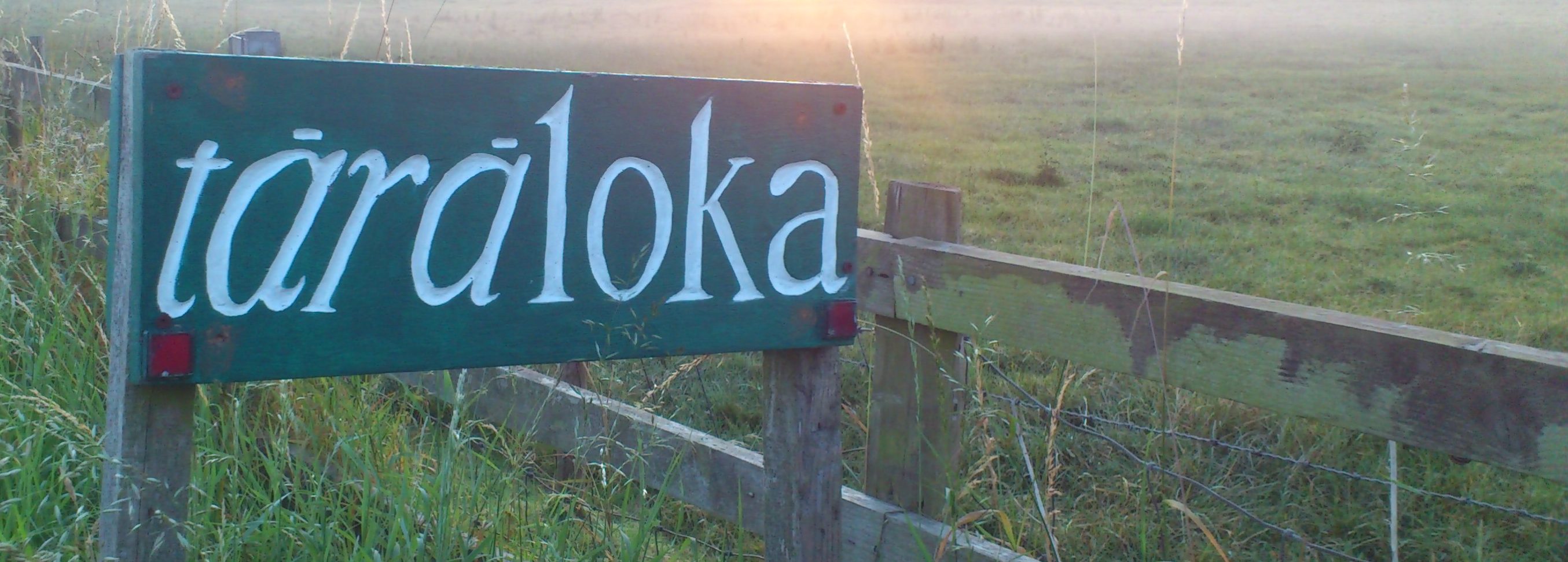
I have meditated pretty regularly for the last two years and wanted to explore my practice in greater depth. After doing some research I settled upon the Taraloka Women’s Buddhist Centre on the Shropshire border and booked myself into a mindfulness five-day retreat at the end of August.
it was with some trepidation that I arrived, not knowing what or even who to expect. The setting was amazingly beautiful landscape right on the border with Wales and it is possible to walk across, via field paths.
Without dwelling too much of the physical, the atmosphere was infinitely peaceful. A regular routine settles over you quickly and without the distraction of modern life, each retreatee is able to concentrate on the momentary experience they perceive.
For five days I heard no noises other than the sounds of nature, the voices of women, speaking, singing, praying or chanting. I looked at no screens and had no mirrors to regard myself in other than one the size of a bathroom tile.
I spent several hours a day meditating and at times deviated away from the set schedule to spend time on my own with the various feminine aspects of Buddha that manifested around.
I learned about the sky, and the earth and how I am connected to both, together with all over living beings.
I reflected upon myself and my relationships and cried with joy and with sadness. I shared intimate details about my life and goals with a group of women who will never be together again in the same place.
I discovered with amazement that Buddhism has a system of understanding that explains my sensory difficulties in thirty minutes better than any healthcare professional has been able to in the last five years.
I took so much back with me into my life, wisdom, space, and a renewed interest in meditation that now extends itself into a twenty-minute daily session. It is the first things that I do when I rise now.
Cracks are funny things to talk about when you are autistic and have mental health problems.
People who are mentally ill are referred to as crackpots, or just cracked. As individuals and increasingly as a society we talk about the cracks that people fall into as we become more complex individuals and block contracts become less appropriate.
All the references to cracks I can find in Western culture focus on being broken. Split apart. No longer whole.
A fairly sad state of affairs for anyone to consider.
Japanese culture celebrates a different kind of crack. Kintsukoroi means ‘to repair with gold’. Essentially, repairing pottery that has fractured and celebrating the breaking.
Understanding that the piece is more beautiful for having been broken [and that it is possible to make whole again].
This is such a great concept to apply to people. Mental health recovery should be about repairing the cracks with silver and gold; the preciousness of kindness, compassion and shared responsibility. Of services being the gold or silver. The supporting and binding structures that are able to change with the needs of the person. So services and professionals need to be able to change their working and approach across individuals, groups and also the stage of recovery.
As the metal is liquid, so it can be applied and then hardens to leave a beautiful historic record. In the same way, the mental health support people receive always staying with them, imprinted in their history. Sometimes you get your cracks repaired with silver and gold but more often than not it is mud. Dark, dirty, and brittle and weak over time.
Lovely day last week at the NHS innovation Expo, where NHS England asked me to speak about my lived experience with personal health budgets in relation to treating my sensory processing disorder. I was one of two speakers in the session that I participated in, the second being an amazing lady called Michelle who manages the care package for her brother who was left profoundly disabled after he was attacked.
It is always nice to share stories, but it is nicer to meet friends and quite a few were here. Dom Cushnan, who works for the Horizons team at NHS England to promote social movements in the NHS using digital technologies, also attended and was able to introduce me to a number of contacts he had referred me to on twitter.
These included the fabulous Ali Cameron, a mental health activist and all round amazing person and Paula Rylatt who works to develop innovation in South Yorkshire. Far too much coffee was drunk and after getting on the wrong train on the way up from Derby I managed to arrive, breath and begin the speaker session immediately. The years of pretending to be a swan (serene on the surface…) working in agency account management still holds true even after years out the marketing industry.
The Expo itself had some interesting talks on, but as a whole it is still quite concerning to see how much permeation personalisation and the lived experience voice has yet to do. Asking the question about service user involvement in one of the event Q&As I was referred rather quickly to a forum, on a website I had never heard of and told that the innovation under discussion was enthusiastically discussed here, before the next topic was rather quickly moved to. There still seems to be an awful lot of willingness to spend money on bespoke systems that very rarely talk to one another (huge issue in the age of networked systems) when there is usually an open source version available and already doing the same job quite well thank you.
It was certainly interesting to visit such a big corporate event designer for the financial movers and shakers of the NHS. Despite the budget cuts, there is still quite a lot of budget still in flow. The stands of the exhibitors had a very high level of polish which usually means that there are some pretty large deals being cut.
Logie: logo, as in the things cars have on their fronts
Squeakquins: sequins, obvs.
Moddled up: Muddled up
Fighty: how you feel just before you punch your friends, but not so serious that you don’t want to be their friend any more.
Quote of the month: “I keep smacking myself in the head. I’m a smackhead.”
And my hasn’t he grown?
This website uses cookies to improve your experience. We'll assume you're ok with this, but you can opt-out if you wish.AcceptRead More
Privacy & Cookies Policy
Privacy Overview
This website uses cookies to improve your experience while you navigate through the website. Out of these, the cookies that are categorized as necessary are stored on your browser as they are essential for the working of basic functionalities of the website. We also use third-party cookies that help us analyze and understand how you use this website. These cookies will be stored in your browser only with your consent. You also have the option to opt-out of these cookies. But opting out of some of these cookies may affect your browsing experience.
Necessary cookies are absolutely essential for the website to function properly. This category only includes cookies that ensures basic functionalities and security features of the website. These cookies do not store any personal information.
Any cookies that may not be particularly necessary for the website to function and is used specifically to collect user personal data via analytics, ads, other embedded contents are termed as non-necessary cookies. It is mandatory to procure user consent prior to running these cookies on your website.