Jenn Layton Annable

Jenn Layton Annable

Writing: life, research and things that grow.

Category: Uncategorized

  • Wrapping with Jane Bevan

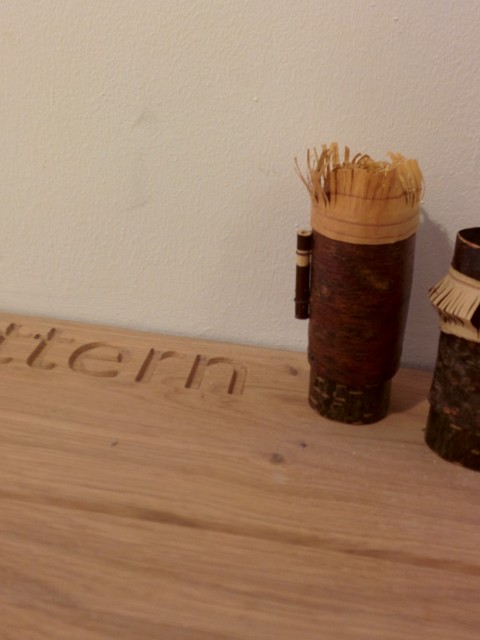
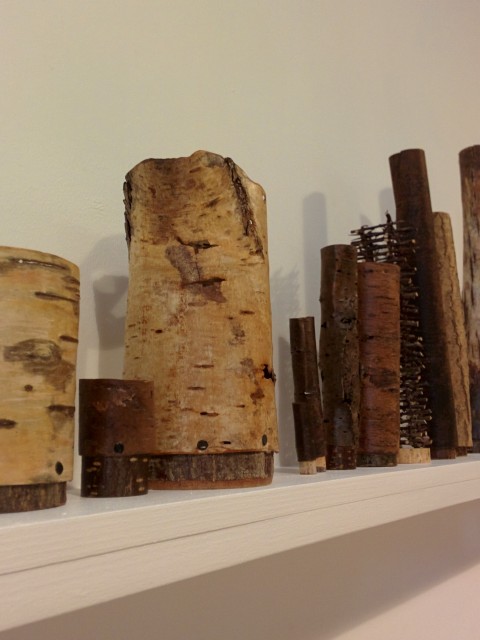
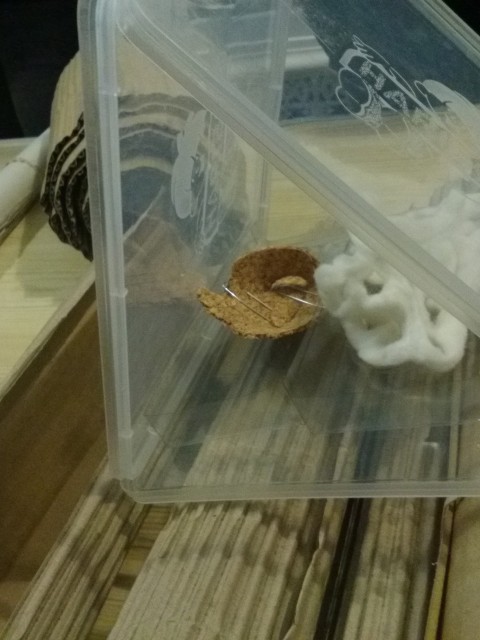
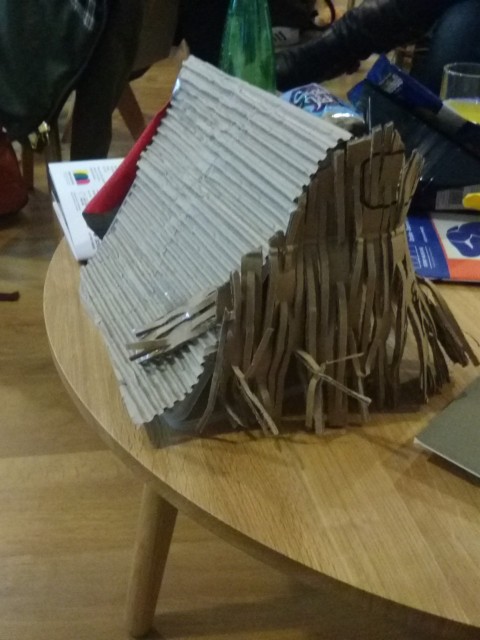
    I spent a second day working with Jane, this time focusing on cutting and fringing using some beautiful exotic bark acquired Jane from a nursery.

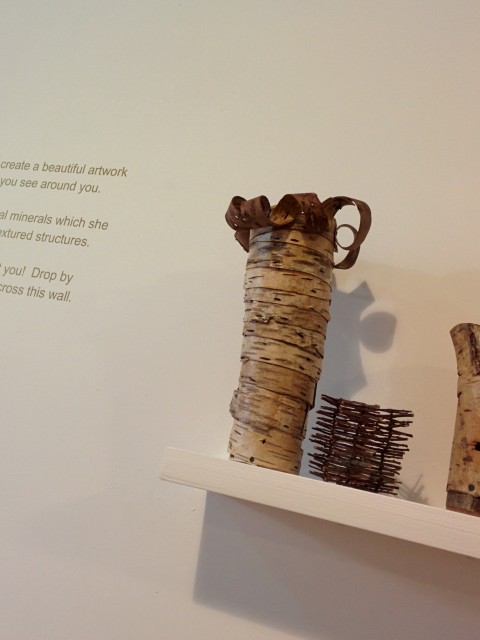
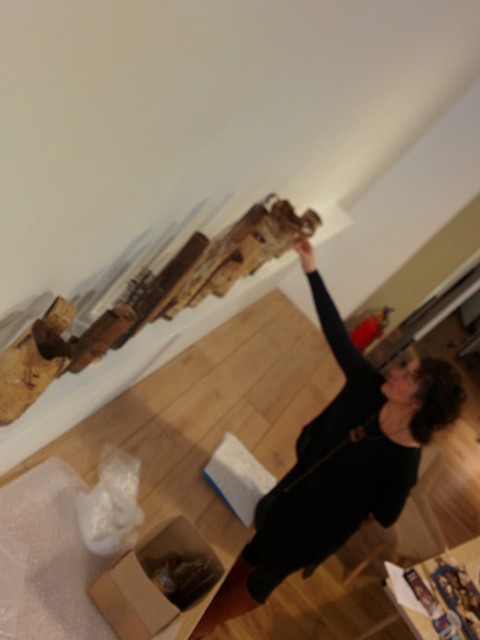
    I also spent some time with Jane and Andrea as they began to curate the vessels  created for the Inspired by Nature gallery installation. The space is partially constructed and can be seen in Derby Museums over Christmas and the New Year if you are quick. We have planned a 2 day final installation process on beginning on the 6th January 2016. I’ll be documenting it further with video and photography.

  • Binding with Jane Bevan

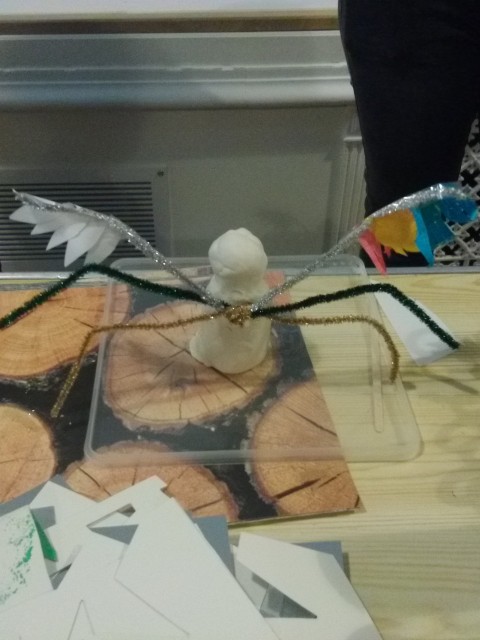
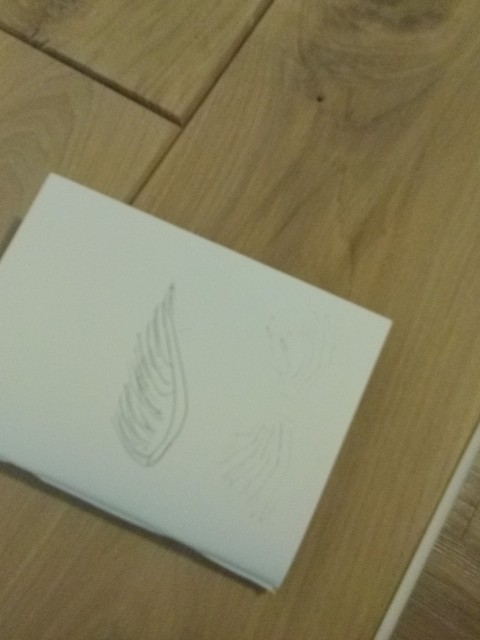
    Today I sat and worked in the Inspired by Nature gallery with artist jane Bevan whilst she started creating her commission for the space. The conversation was exciting and creative. I revisited some of the ideas that I began to develop during my Foundation Course and  and applied them to the materials that Jane had collected; feathers, bark, leaves and seeds. Her is the fruits of my morning’s labour. I am hoping to continue the talk and ideas swap later, with the possibility of working in nature on larger scale installations in situ…


    Jane Bevan experimentation
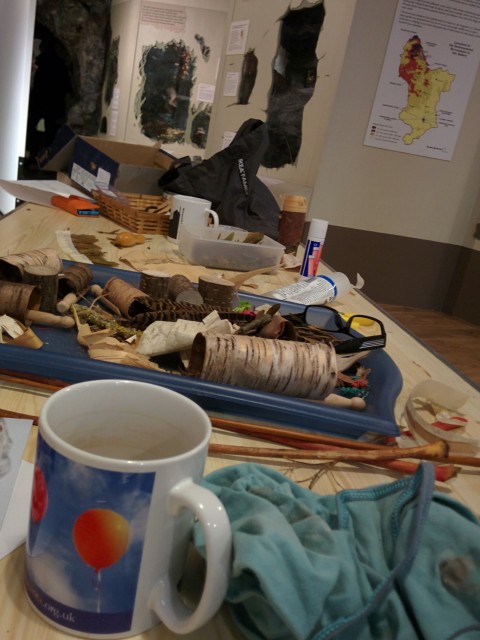
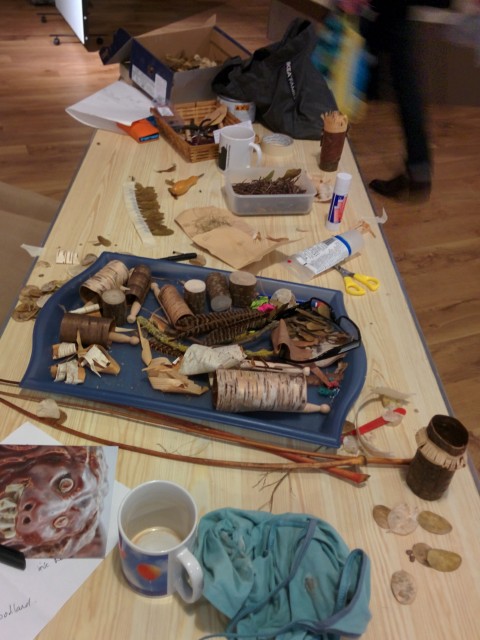
    A bit messy but a work in progress


  • New Skills – Nature Sculpt, Vinyl Cutting and Laser Cutting

    I’ve been keeping my eyes open for opportunities to try out new skills and reignite my interest in older ones. When I was at secondary school and college much of the work that I did was tangible; drawing, print making, fashion designing and sewing, textiles. Since I graduated I have worked increasingly in digital and virtual. Don’t get me wrong, I love the skills in UX, design and project management that I have developed, but making, the experience of feeling it in your hands, interacting with the materials as they are shaped into something new is something I miss.

    In the last month I have found some great chances to expand out my repertoire and try out things I’ve not done for an awfully long time.

    The first two were short courses run by the Museum of Making Curator Daniel Martin (vinyl cutting), and the Silk Mill Maker-in-Residence Graeme Smith (using the laser cutter with InkScape).

    Both took you through the basics of how to use the software and the hardware to create something to take away.

    Vinyl cut acrylic designs
    From the laser cutting I left with an upload of the software (which is OS and available here) and a phone stand made from laser ply. From the vinyl cutting lab I left with two printed acrylic sheets with designs on, one for my son and the other for my partner. In both cases I left with a good working knowledge about how to do the process myself, but more importantly with ideas about how I could apply them to my own creative development. Every Thursday evening at the Silk Mill is the Open Make. I am going to start going for the last few this month (December) and then again when the venue opens again on February 2016.

    The last creative skill I tried again was linked in with the work that I completed for my Foundation studies in Art and Design. At the time I was fascinated with wrapping and revealing; ephemera, bodies, rope, clothing. It manifested itself in a number of ways. During one of the days I volunteered at DMAG the artist Jane Bevan ran a workshop based upon her own creative practice, one of foraging and developing unique pieces from her finds. I had gifted some peacock feathers to Andrea who included these in with the materials supplied by Jane herself. Andrea kindly invited me to participate in the workshop which drew about 15 other people, many of whom were practicing craft artisans as well.

    Natural mobile from Jane Bevan workshop
    I arrived late and only stayed an hour, but during the time managed to create an really eclectic mobile, incorporating wood, feathers, pine cones and copper wire, juxtaposed with a very bright, modern parcel tying string to create a nature mobile. It was lovely to connect with natural materials and remember making something beautiful from found objects. I recalled just how much I love being alone in nature, particularly by myself. The experience is something about being in the moment, seeing the light flickering, hearing the susurration of the plants and trees. Making something new from the natural environment changes it but evokes the experience found in nature and in some small way brings it back into the artificiality we now live within.

    Notice Nature sky shot
    Andrea has invited me to assist Jane in the creation of a number of vessels for the Inspired by Nature space at Derby Museum.  I’m hopeful I can work with Jane, incorporating some of my own ideas to compliment her own.

    I’ll post some pictures here when I have completed the activity.


  • MA Museum Studies Students Visit DMAG

    On the 17th November the latest cohort of MA Museum Studies students from Nottingham Trent University visited Derby Museum to meet with Andrea H-J and learn more about the museum’s approach to collaborative project development  and  the reimagining of the ‘Notice Nature’ gallery.

    Students listen to Andrea Hadley Johnson present on the Notice Nature Project


    The students experience had been broken down into a number of tasks:

    1.  Read the Human Centred Design Handbook, and the Museum Association article in advance of the visit.
    2. Listen to a talk on the Notice Nature gallery and how collaborative working was integrated.
    3. Explore the different galleries and spaces within DMAG and reflect on them.
    4. Complete a prototyping exercise to create a new interpretative tool for the nature gallery.

    I was involved in the development of the student’s day, and make a number of contributions, including; recording the process of the prototyping exercise to allow it to be used again, creating a visual record of the students experience as they completed the exercise, gathering materials and setting up the space, working out how we could reflect with the participants on their experience in a fun and relevant way.


    Andrea really wanted to challenge the students by taking them out their comfort zone with the prototyping. We gathered, essentially, a bunch of junk from the Derby Play and Recycling Centre, supplemented with  stationary and play-doh. The idea was to cut away the usual restrains that curb creativity, such as health and safety or space constraints, and instead respond to the materials provided and ideas presented.

    Materials ready for creative hands to explore


    In terms of the evaluation,  something written and questions focused was deemed inappropriate, firstly because of being away from the spirit of the event an also because the university had not asked us to do this. One thing I have recognised is that the public sector seems to be quite a way behind the private sector in measuring the value of something, using it as an opportunity to learn a lesson. I thought that as this type of experience was held a number of times a year, some kind of feedback would be useful.

    Derby Museum measures interest in their activity with fun engagement


    We eventually settled on a playful solution that also cleared space in the co-production office. Each student was given a collection of the mascot stickers that were used earlier in the year for voting. They were asked to apply these to a sheet under which of the 4 exercises had been the most useful part for them. We developed this idea. Each student was given some of the Notice Nature post-it notes to use for their own thoughts on the feedback sheet and badges to take away – we did lots of tweeting with them too.

    Coffee and welcome packs for the Nottingham Trent MA students


    Working through the discussion about the feedback was a bit hairy as it museum evaluation is an area that I don’t really know much about. I’m pleased that I stuck with it though as I think that the end solution added a great deal to the value gained and the visitor’s time on the day.

    I’m currently working on the last version of the toolkit to allow staff to repeat the exercise in the future. Andrea and I are meeting to review the content next week and I’ll post a copy of the finished toolkit on my blog when it’s done.

  • Derby Local Offer event

    I attended the Derby Local Offer event at Derby QUAD last Friday. It hosted a number of organisations who work with young people (read up the the age of 25), who have disabilities and other additional needs.

    I went in a number of roles. Firstly to see if there was anything relevant for the Autism organisation I am involved in, Right of Way for ASD, second to see if there was anything that could also work for me as an Autistic individual and third to see if I could begin to figure out why services seem to stop for people who are aged 25 or 30 respectively.

    Speaking to a lot of the voluntary organisations such as Umbrella, or Derby City Parent Carer Forum  and the like it is understandable. Most of them have been organised and established by groups of parents frustrated with the lack of organised support and facilities for their children and families. In these cases it is of course only natural that the focus should be on children, and increasingly on young adults as these families grow up. It still highlights the shameful lack of understanding and support for families with additional needs such as those with high functioning Autistic children in Derby. You do wonder that nobody seems to give any thought to these young people as they grow. There are also the rest of us who received our diagnoses as adults or who just got too old and so abandoned in the wilderness.

    Despite everything, there are some really good ideas coming through in the city…

    Derby Shared Lives offers support to adults who are vulnerable, either in their own home with a more typical support worker visiting, or alternatively by living with a host family, either for a short break or as a member of the household. Host families are trained to assist their visitors, and will be involved with things like social or household skills, getting out into the community or support in other ways.

    Derby QUAD holds supportive environment screenings, which include subtitled films for deaf audiences, described films for partially sighted or blind audiences and adapted screenings for those with sensory issues, (involving reducing volume, keeping the lights up and allowing people to move around. The demonstration of these on the day of the event gave a good indication of how they differ from the usual film showings).

    The St James Centre in Normanton supports individuals and their families with complex and additional needs between the ages of 3 and 35 years old. They run a range of services, from social events, employment support, and host a disabled women’s social group. Additionally, weekly sessions for children are held across the week under the ‘Fun-abil8y’ banner.

    Disability Direct manage the Lottery Funded ‘the stuff’ website that acts as a great focal point for information relating to services and other organisations for young people and adults with additional needs. Like most things the service is for those who are up to the age of 25 years old, or over 50 years old. When questioned about this, the response I got was that “this is the requirement for legislation.” it was suggested that I write in to point out the disability doesn’t cease for 25 years in the middle. it would be good for somebody to perhaps pick up on this and make provision without needing a poke though!

    Jumpz Fitness hold fitness classes for individuals with additional needs or a disability. They take place once a week at Derby College between 11 and 12am. THe organiser Michelle has experience of working as a support worker and is also a competitive powerlifter. I spoke to her at the event and she was really engaged, describing the project as something that allows her to combine both the passions in her life.  Jumpz also works with an Aikido instructor in Milford to provide adapted lessons, weekly on a Sunday.

    If there’s anything else you’re aware of please let me know. It would be good to be able to make further connections.

  • Volunteering for Derby Museums – first impressions.

    Derby Museums Mascot stickers

    So a brief conversation on twitter about Aves, the music @DMNature gallery had commissioned for their natural history spaced turned into a fully fledged volunteer opportunity working within the co-production team. My main contact is Andrea Hadley-Johnson, the Co-Production Manager who is an amazing arts and culture professional who was the Head of Display at habitat in a former life. I’ve met a lot of the volunteers who assisted with the redevelopment of the nature gallery, as well as the larger co-production team who work on everything from audience engagement, which features a huge amount of data, through to technical support creating, building and maintaining the exhibits themselves.

    I’ve already made a good start on the video I mentioned in my original tweet ( more news here later) and will be assisting with a prototyping exercise for MA students visiting from Nottingham Trent University on the 17th November, next week. That has been fun to prepare for, including collecting junk and creating a creative and unusual ratings system for the students to reflect on what we have asked them to do, using leftover mascot voting stickers.

    On the day, I’m going to be hanging about in the background, recording the student’s activities and communication. This will be included in an activity toolkit to supplement the Human Centred Design Handbook the museum has already made.

    In the coming few weeks I’m hoping to get involved in some of the new ceramics gallery project labs and also learn some of the theory behind co-production from working with Jane Hardstaff.

    If there’s any specific projects I get involved in like the prototyping exercise I will post about them here.

  • Weekly Round-up 5/11/15

    This is what I have been doing / reading / loving this week:

    1.) Silent Signals is a collaboration between University of the Arts London, Derby University and the Derby QUAD. It ‘s aim is to develop the intersection between science and art through collaboration between specialists in these fields. A symposium has been planned for February 2016 which I shall be attending, together with an exhibition of 6 animations, based upon genuine scientific research, that are the result of the project.

    Image courtesy of the Silent Signals website

    2.) Lunar21 held it’s second live event of 2015 at the Derby Silk Mill on Monday 2nd November. The topic was ‘the power of co-creation’ and speakers from Derby City Council and Derby Museums Trust enlightened the audience on just how they were adopting organic working methods that focused of team work and collaboration that traditional lead and follow management. Lively debate followed, trying to pin down just how and what co-creation is with a number of different points-of-view expressed.

    Image courtesy of Lunar21.com

    3.) Chris Unitt’s culture digital’ newsletter  is worth signing up to if you are interested in the meeting of culture, the arts and digital surprisingly enough. I received my first edition this week and it included some great articles. Here are the best:

    4.) I found an amazing video by a Swedish Professor Hans Rosling who shows what amazing things can be done with data and it’s visualisation.

    The Joy of Stats from Gapminder

  • Canvas Conference 2015 – Part 1

    On the 22nd October I attended the fourth Canvas Conference, hosted by 383 Project, in the Birmingham Library. 383 describe their digital product event as:

    “revealing the insider stories from teams building some of the world’s most useful products & services. Over a one day conference, you’ll hear from people who are solving problems at the intersection of technology & business.”

    Canvas conference 2015 registration
    This was the second time I had ‘canvassed’ myself and the growth in the event between this year and the last was self-evident. The number of delegates had doubled from under 150 to over 300. The number of speakers increased across the day, as well as the ground covered in their talks.

    The day included ample time to socialise and network. I personally spoke to people who had travelled from as far a field as Brighton, Belfast and even mainland Europe for the day. A great moment when Birmingham is attracting delegates from the South-east and London.

    Networking before the mornings talks began
    Increasingly Canvas is attracting more prestigious and international brand speakers, as well as selecting from a crop of innovative home-grown talent; from established brands such as Travelex, through to smaller start-ups, like Go Cardless.

    This year the full range of talks focused exclusively on digital products and services; a nice change from 2014 when some of the speakers chose a broader ‘operational’ theme to their segments.

    There were eight speakers in total :

    Tom Guy | Hive:

    “Designing the next generation of smart home products for the home.”

    Covered the development of the product and customer experiences, from working as a start up within a traditional utility company, through to hiring Yves Behar to conceptualise product development. The process of the product’s journey was the thread of this talk and the importance of usability and intuitive design being central to the creation of Hive. A really enlightening piece of an innovative move by British Gas to differentiate themselves in their industry,

    Julien de Preaumont | Withings

    “Creating connected objects that bring technology into your everyday life.”

    Withings create health products with intelligence. Like Hive, the UI and UX is of paramount importance and as a company Withings have kept the basic functions of, for example, electric scales, whilst overlaying additional function and integration with devices such as smart phones and smart watches. As a brand Withings are very much working within the sphere of dominant digital trends, namely the internet of things and also health tech.  Combining with this the design aesthetic for products that would usually be ugly (think things like NHS blood monitors) they are responding to the needs of an ageing population who are used to every objects having a sophisticated finish, as well as recording personal data for future use.

    The Medium tech' ecosphere
    Joe Polastre | Medium

    “Building a community of readers and writers offering a unique perspective on ideas, large and small.”

    Medium is a web based publishing interface that allows users to write around what they are passionate about. The social element is crucial. Medium are interested in extrapolating data from their site to make the experience more personal and intuitive, as well as improving upon the traditional blog/forum/comment experience that typifies internet discussion. Readers have the ability to comment inline as well as at the end of the articles. Unlike the traditional interface, comments are hierarchied against your own network on the site. Those from your followers or those you follow are listed first. Design is considered  and consistent across different screens and platforms.

    Probably the most interesting aspect of Joe’s talk was the diagrammatic overview of the Medium tech’ eco-system. it was huge! Integrating systems from cross-screen synchronisation to email data visualisation, allows Medium to cut and analyse data in way that are not possible in many organisations.

    In clustering content by keyword, topic and author Medium have been able to use semantics to suggest links to content groupings with surprising benefits. They discovered that spammers had begun using the site and tended to associate their posts with certain categories and keywords. Clustering those content allowed Medium to identify and remove spam far more effectively as a result.

    Liz Crawford | Birchbox

    “Helping customers discover the best in beauty, grooming and lifestyle products.”

    Birchbox are a pureplay brand that has recently moved into bricks and mortar retailing. The whole offering is based around personalisation, from the customer journey, working from beginning to end, to the discovery box content.

    Birchbox consider their each customer as a whole, and understand that their customers see the brand as a whole, not a bunch of connected components – email, app, store, packaging. Like many of the other speakers Birchbox create a physical product, however with something as subjective a beauty and grooming, the cost of making mistakes with such a physical product is much higher. Birchbox employ data analysis and learning at all stages of their customer journey to build up a picture of their consumer over time. They have learned to detect changes in the state of their customers and respond to each individually, rather than to a schedule driven by a marketing calendar.

    Birchbox personalisation word-cloud

    I particularly enjoyed this talk, one of the few given by a woman in a high level tech’ role and Liz’s obvious confidence with the mathematical aspects of the role she undertakes. The complexity of the data handles by Birchbox was huge and the algorithmic analysis that allows it to orchestrate the customer facing side of Birchbox was explained in simple and relevant terms to the audience – a inspirational approach to what could have been a dry topic.

    Dave Wascha | Travelex

    “Creating a smart digital payment card for travellers.”

    Travelex work in a traditional industry and have decided to gain the edge by leading disruption rather than being subjected to it. They have gone back to basics and examined the challenges their consumers face; understanding currency exchange, keeping cards safe when abroad, reducing reliance upon their banks and the fees that they charge.

    Product responses to these include a currency conversion app featuring a drag facility that demonstrates currency conversion and fees on an increasing / decreasing scale and a card that allows the user to register a number of cards against it, negating the need to carry them out whilst on hoilday. The same product also spoofs withdrawals abroad being made from within the UK. In the first 6 months beta test with 25,000 users the card has saved in excess of £500,000 in forign withdrawal and card usage fees.

    As well as being an engaging speaker, Tom told the story of the Travelex brand in a contrasting fashion to the previous speakers. He was able to draw comparisons with both Hive and his own work in Travelex’s decision not to create a new standalone brand as the history of the company was one of innovation, despite it’s string brand heritage and recognition.

    The first half of the event was engaging and was brilliant as exposing some real life examples of the kinds of trends we have heard bandied about for a while; the internet of things, the semantic web, pureplay and retail brands crossing over into each others space.

    The conference featured a further five speakers who I will follow up on at a later date owing to the size of the post. Hopefully this will be enough to whet your appetite and potentially order tickets to next years event.