Jenn Layton Annable

Jenn Layton Annable

Writing: life, research and things that grow.

Category: Uncategorized

  • Finding Lines Opening 14/7/17

    Tonight I went to the opening of Finding Lines, the last exhibition at Derby Museums and Art Gallery. It was curated by my wonderful friend Andrea Hadley-Johnson, who has been sadly absent in my life recently because of the flurry of activity in getting everything ready. The creative and wonderful results have been worth the wait, as her sparkles were evident everywhere in the space and atmosphere.

      The event had been carefully planned with entertainments and distractions to suit all ages and temperaments. Carefully constructed linear face painting, turned participants into living works to admore alongside those hung on the walls.

     The museum cafe was transformed into a lively bar, complete with DJs and doodling invitations enticing passers by to linger longer.  The fabulous culmination of the Twitter hashtag, #findinglines were displayed in a colourful and engaging grid of pictures, continuing the co-produced themes that permeate Derby Museums Trust work. 

    I took up a suggestion to sit, chat and sketch by an artist who doesn’t take his eyes off you. The result is a melty, swirly picture that reminded me of a Dali dreamscape.


  • Peer Leadership Academy, days three and four.

    Peer Leadership Academy, days three and four.

    It seems like the last month has passed by in a flash and I found myself travelling back to Loughborough to participate in the second installment of the Peer Leadership Academy co-produced by the lovely PeopleHub and NHS England.

    Considering how surprised I was by the first session I had less expectation and more anticipation about what might take place this time around. We had a broad outline, but given the unique nature of the experience, shaped very much by the contributions of my fellow cohortees, it was not possible to guess just what could unfold.

    We settled down more quickly this time as everyone knew each other and dynamics in the group has been previously established. In the first two days in May the focus had been on introductions, knowledge sharing and really understanding just what Personal Health Budgets and Integrated Personal Commissioning were from a bird’s eye point-of-view.

    This time around, much was given to individuals telling their own stories to the group, firstly as a means of receiving feedback on how we all did and also for us to understand more about each other’s own experiences. The diversity of the conditions my fellow participants deal with is vast, encompassing a range of progressive diseases, different accidental injuries, as well as those who care and advocate for family with similar conditions.

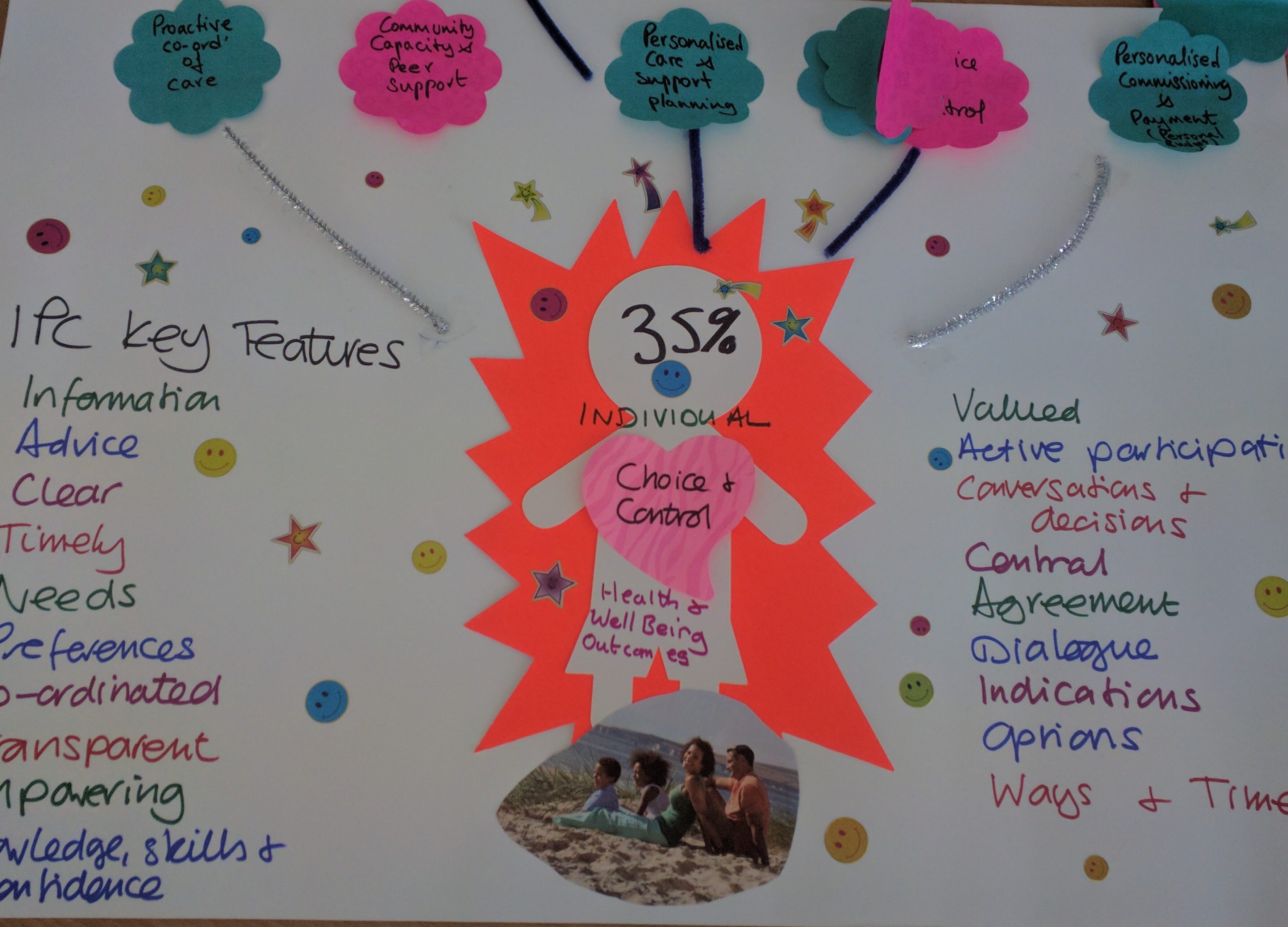
    The overall aim of the academy was beginning to become clear to me, and also to each one of us who was taking part. We were beginning to ‘get’ just how powerful a change the personalisation of care and health was going to be. This was both in the differences it had made to us individually, in terms of control and wellbeing in our own lives and also how transformative and potent it would eventually become in the NHS when embedded.

    Sam Bennett, the Deputy Director Personalisation & Choice, Head of Integrated Personal Commissioning & Personal Health Budgets for NHS England devoted a couple of hours of his time to present and answer some pointed questions about his team’s work in relation to our own lived experiences on the coalface. I thought he answered them well and took feedback in good grace. It is a shame that other officials in many of our organisations are less willing to be placed in the limelight as Sam was by us.

    The last afternoon was particularly emotional for me. I was very tired, having slept badly the night before.

    Witnessing the stories of two others in the group, who frankly dealt with more daily challenges than I do because of the physical nature of their conditions, made me realise that there was in fact hope to be held.

    For much of the last five years, life has been about a day-to-day existence, with so little ability to make plans that there becomes no point in trying to reach for anything beyond getting past the next 24 hours. Seeing the pictures of others who have lived with their conditions for far longer than me; who had set up companies and charities, travelled and developed relationships had a profound effect. The emotion I had been carrying welled up, and I broke down. The experience was very cathartic and shared by many of us in the room as we carried similar burdens. They are heavy but their constant presence anaesthetises you to them. A reminder can be like letting the dam go, and I had a bloody good cry. I think that we bonded in a way that was quite unique through this.

    Living with a long term condition which affects every area of your quality of life is something you cannot comprehend until you have it. Despite the diversity, the similarities in the challenges we had faced and had overcome or were working on, were startling.

    We realised collectively the importance of our contribution as peer leaders. Many in the room had overcome personal challenges and has been pathfinders for others; forging ahead when what we needed or wanted was not available. Others of us were still finding our feet. Despite being something to be proud of, being an innovator can add to the isolation and loneliness that is already present with a long term health condition.

    IPC focusses on the need for peer support networking, and that afternoon showed me how often peer support can be poorly aligned along geographical proximity, or diagnoses for example. The real difference is made when peer support is less contrived and people who have deeply personal, shared experiences are brought together with sensitivity.  I am so pleased to have been able to connect with my peers in such a way. It was a deeply moving experience, and one that touched me in many ways. I am still much further behind others whose story I heard that afternoon, and finding the strength to keep going when you don’t know what the end point might be is hard. Seeing others being where I wanted to be, and hearing the insight they gained along the way reminded me, first to keep positive and second to enjoy what I am learning as I travel to wherever it is I am going to end up.

  • Derbyshire Autism Partnership Board meeting, May 2017

    Derbyshire Autism Partnership Board meeting, May 2017

    **Please note all views in this blog post and website are my own and are in no way affiliated or represent the Derbyshire Autism Partnership Board.**

    I attended my first ever Autism Partnership Board (APB) meeting for Derbyshire and I have to say (quite ashamedly) how much it has opened my eyes to the scope of the work and the challenges faced by people working towards parity for those of us on the Spectrum.

    Autism Partnership Boards (APBs) were established in each county around England and Wales after the Autism Act 2009 laid the grounds for legislation that outlined the statutory duties of each region to provide for individuals on the Autistic Spectrum. Since this original piece of work there have been a number of updates that have refined exactly what the duties and responsibilities are that must be met regionally.

    Jennifer Stothard, an Autism Project Manager for Commissioning and Performance in Derbyshire kindly invited me to this meeting to see if it was something that I might like to become involved in more regularly.

    The meeting was attended by a whole host of individuals from across Derbyshire, including representatives from Derbyshire Healthcare Foundation Trust, Derbyshire County Council and the Department for Work and Pensions, and Derbyshire Autism Services. As well as myself, Craig Kennady, another individual living with autism who is also Co-Chair, was present, creating a really strong cross section of expertise within which to share information. Legislation outlines that the APBs much “bring together different organisations, services and stakeholders locally and sets a clear direction for improved services”. Derbyshire has certainly created a strong working group against this first requirement, and the benefits of this became apparent immediately.

    The topics covered were frankly vast, and this is where my own insight developed. It is always very easy for a person’s world-view to consist of their own experiences and mine have always been focussed on:

    • issues faced by females on the spectrum, from diagnosis to presentation
    • the provision of mental health services, and health provision more generally, such as Acute Care, GPs and Maternity Services
    • Provision of Social Care to individuals on the Spectrum
    • Reasonable Adjustments and Autism in the context of wider Disability landscape
    • Employment and Education
    • Parenting as a woman on the Spectrum
    • Relationships when one or more person is Autistic

    This is the point where I have to hang my head slightly. I have always been skeptical about the realities of someone living with autism, compared to the top-down provision for us as a group. I’ve felt let down and often ignored and thought that much of the time much of the work being done was a box-ticking exercise. The large documents and spreadsheets produced in response to Government requirement can reduce you to a statistic, which is never a nice feeling

    Participating in the APB revealed exactly how vast the task simply is; reaching into so many aspects of public sector work, that the amount of coordination is quite staggering.  Similarly, I was left knowing just how much more there was I needed to think about.

    In the meeting the Probation, Criminal Justice System and Courts were covered, the aging population with Autism, as well and provision for service transition from children’s to adult services. Housing and employment were discussed extensively. Even within mental health provision you are talking about Forensic Services, Child and Adult Mental Health, as well as a myriad of specialist areas such as Perinatal Mental Health.

    I don’t feel it is appropriate to discuss the exact content of the meeting as I feel much of it should remain confidential. I did however, gain an overwhelming sense of just how committed everyone was to doing a good a job as possible, for the benefit of the Autistic Community in Derbyshire as well as the people working with them.

    When the time was right I was able to comment on matters being discussed and use my experiences, referred to indirectly, to offer some insight into how things might be better achieved. It is a really great feeling to walk away from two to three hours work and feel like I have made a positive change and helped other people in a complex undertaking. Since the meeting a number of further opportunities have popped up for me to help, for example, create content for the APB which I am hoping to become more permanently involved in.

    I know that it’s not possible, but if many more people could have the chance to sit in on an APB meeting in Derbyshire it might just help relieve some of the very real frustrations experienced. As a group of about seven thousand people in Derbyshire Autistic people are a large group, but relatively small in terms of the overall numbers who live here. We have a tiny amount of resources made available compared to other comparably sized groups, and possibly are far harder to quantify in terms of managing us collectively. Although at some level, you have to work with numbers and statistics rather than individual stories  to work effectively. However, what the spreadsheets and graphs don’t communicate well to the reader is the scale of the work that is being undertaken and the humanity of those doing it. Jenn, took on the job working as the adult lead because her eldest son is on the spectrum and I hear many more stories like this; from people who have seen or experienced the problems autism can engender, and who want to do something to bring about change for the greater good.

  • Peer Leadership Academy – NHS England and People Hub

    Peer Leadership Academy – NHS England and People Hub

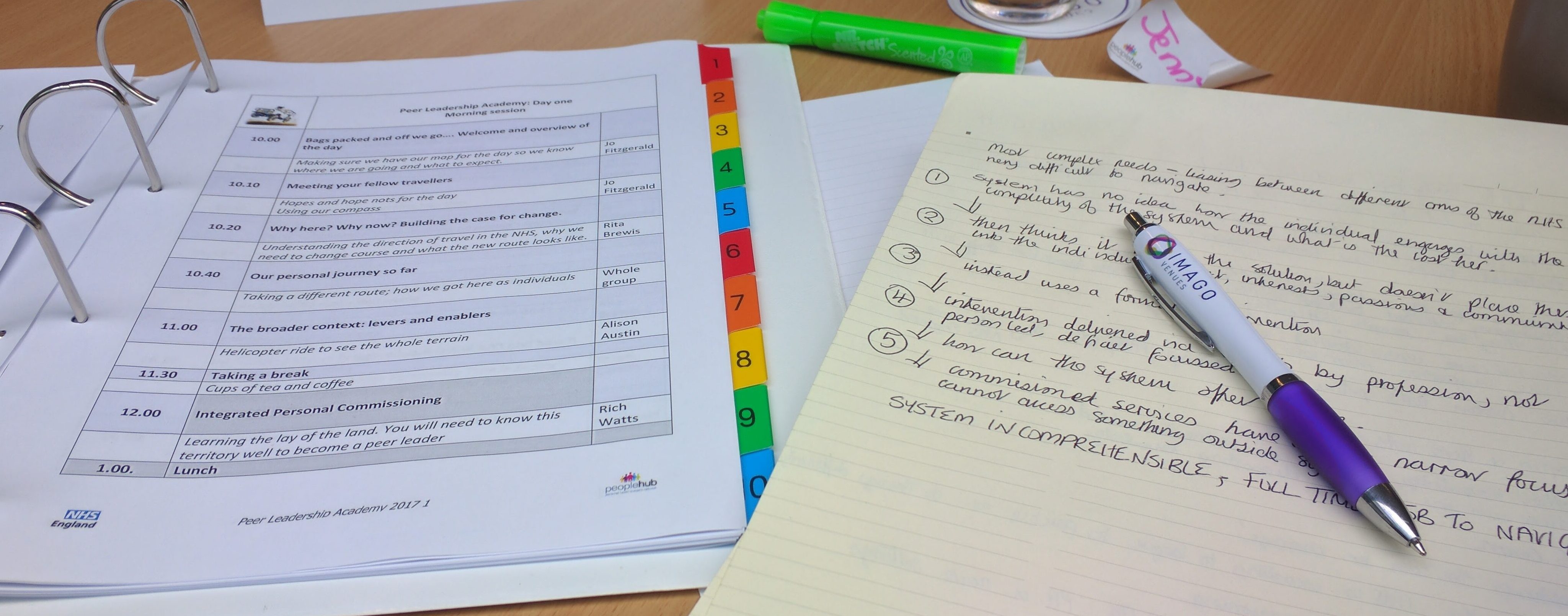
    This week I attended the first two of six days of a personal development programme run jointly between NHS England and People Hub after I was successful in my application to take part in the Peer Leadership Academy.

    The Derbyshire PHB Network leader Tina Brown was kind enough to forward me the applicant’s information which I found intriguing and so I made an application, and was offered a place on the final cohort of participants.

    People Hub is an incredible organisation, set up by several co-founders who have direct lived experience of personal health budgets and of working to develop them. One of these, an amazing individual, Jo Fitzgerald, who pioneered the model for the son Mitchell after realising just how much more beneficial his care could be if it was modelled around his needs rather than those of the provider. Sadly, Mitchell died several years ago, but his memory lives on in the work undertaken by People Hub and Jo continues to share her own story to instigate change for others living with long term condition as well as working for the NHS England team.

    Every contact I had with People Hub prior to attending the event was brilliant. They were accommodating of and interested in any adjustments they could make to help each participant get the most from the event – a pretty large undertaking considering the wide range of conditions we all had. My first contact with PeopleHub was with Rita Brewis was very positive and her passion was infectious, a great ice breaker when undertaking something new.

    The Leadership Academy itself was held at the fabulous Burleigh Court Hotel in Loughborough, just down the road from where I live in Derby. I stayed the night between the two days personal development programme to minimise travel for me. The accommodation was second to none, and we were all made to feel very comfortable.

    The Academy itself was way beyond my expectations. The first big surprise was that the several members of the Strategy Teams for Personal Health Budgets and Integrated Personal Commissioning were working along side us as well as presenting to us, which was fabulous. So often you attend events such as these and can feel like a vanity project, where you are rolled out for media opportunities and little else.  One person I felt an immediate connection with was Alison Austin who is the Head of Policy for Personal Health Budgets. Not only was she the only other person staying at the hotel who had food intolerances but her personal style was open and direct which I can only embrace. Her nursing background and the people skills she had acquired working in Glasgow’s A&E are still apparent and her barely detectable Scottish accent which lapses back into broad Glaswegian when she is ‘off duty’ is great.

    The amount of time that had gone into planning the Academy was evident from the start. The course content was well planning and thoughtfully delivered. The balance between conversation and presentations was well made and I felt far more comfortable about meeting my sensory needs, like walking in my bare feet than I had at other sessions. I received a much better overview of just what Personal Health Budgets aspired to be, as well as exactly what Integrated Personal Commissioning is.  My understanding of the health system as a whole, and simply how disjointed it is between NHS England and the service the patient receives greatly increased. Overall I now understand just why things take as long as they do to filter through, but the two days has essentially reignited my hope that the NHS can provide a more personalised service. These changes might take four to five years to filter through to Foundation Trust service providers, but it will happen because this is essential if the NHS is to survive and adapt to the current disruption it is being subjected to. We are all consumers who are used to increasing levels of personalisation. We switch out insurance or banking provider if we get a crappy service but of course have no other options if our health is poor, or have conditions requiring treatment.

    A huge amount of the work involved was around developing those participants with lived experience to be able to contribute and speak about their stories to develop PHBs and IPC. Everyone undertook a Myers Briggs profile and Steph Carson, who is a trained MBTI facilitator, worked with us all over half a day to allow each of us to understand how our profiles and personal style could affect our communication and storytelling. My profile was a little unclear as I wavered on the Introvert / Extrovert scale. I took the two profiles relating to where I might be an decided I was clearly Introvert when reading about how this group can focus on details in the environment when under stress, like cleaning or organising cupboards, which I had done not three days before. Apparently when laughter erupts upon a profile read it is pretty conclusive, so INTJ it was.

    When the People Hub team elaborated on just how we might contribute in the future towards developing the concept there was a tangible buzz in the room. Opportunities included the chance to speak to clinical professionals, take part in working groups and perhaps even eventually find employment with NHS England in the team!

    Overall I absolutely loved the time I spent with both the NHS England team and their People Hub partners. The course content vastly over-delivered on my expectations and I learned so much. The Leadership Academy, like my MSc seems to have come at just the right time to forward my new goal of helping others on the Spectrum get a better deal wherever and whatever their circumstances. I’m really looking forward to the next session in June and can’t wait to see what opportunities might come about because I’ve taken part.


  • Knowing you’re doing a good job…

    You meet someone once and they say lovely things like this about you…


  • Introduction to Autism – Derbyshire NHS Foundation Trust

    On the 22nd May I attended the first of several days training to be delivered by Derbyshire Healthcare NHS Foundation Trust. I had approached the county’s Clinical Lead for Adult Autism, Gaynor Ward, a while ago to see if there was anything I could do to help progress awareness in the organisation. Gaynor, who is a fabulous individual as well as being shit hot on Autism Spectrum, welcomed my input and we organised for me to attend over several one day courses as an opportunity to see what exactly was going on, as well as feedback and prepare for the intensive three days I am presenting at later in the summer.

    I have to admit that I was feeling a little trepidacious about going into professional development as a patient. In the last five years I have had a huge amount of contact with many professionals in the organisation and have at times been quite critical of the service I have received. Initially when I first sat down I simply introduced myself as I didn’t want to draw attention to the fact I was still a service-user. I did however, run into two Crisis Team nurses who have attended to me when I have been struggling. One of them was the first contact I had ever made with this team and completed my first ever assessment (one of many). She had been a brilliant support over the months I had worked with her and I had a lot of respect for her professionalism. It was lovely to be able to update her on just how well things are going at the moment, and how my lived experience is becoming a driving force in my recovery.

    The training was delivered by Gaynor and two of the Trust’s new assessors, Rosa and Anna. The format was fairly standard powerpoint most of the time, with some interesting diversionary exercises that included a Glen Campbell record and a word-search. Gaynor is also a self-diagnosed Aspie, and the ‘unique’ nature of some of the work we did shone with her alternative approach to engagement. Topics covered included the clinical side of the diagnosis and traits, presentation and challenges, as well as adjustments that could be helpful when working with Spectrum Adults. It was also heartening to see a lengthy discussion and specific mention of the different, and often misunderstood, presentation of women.

    The team of three split the training well between the topics and their specialities of Clinical/Nursing, Psychology and Speech and Language Therapy complemented one another well. Despite the pace being steady, the content delivery was intense and although seven hours were given over to the exercise there was still a large amount of content that needed to be skipped over because there simply wasn’t enough time to cover everything off.

    The best bits by far for me were when the trainers and participants recalled personal experiences.

    Anyone on the Autistic Spectrum is likely to be unique and the old adage of having met one Aspie means you have met one Aspie rings very true. Without mentioning names and dealing with the subject sensitively, real life examples expanded out the quite dry subject matter of Autistic presentation into something living and breathing; the reality of nursing practice as I understand it. Most people in the room had lots to say about people they had worked with in the course of their careers and there were also a number of lightbulb moments when realisation erupted at just what had often been baffling was it fact someone with Autism.

    The room’s engagement was highest at these points and during the feedback session I contributed to afterwards I reflected back these times were when people had the most to say. Unfortunately the political correctness fairy made an appearance and discomfort was expressed at knowing how people might feel when asked to discuss this kind of thing. I certainly can’t speak for everyone on the Spectrum, but I do know that given how direct and forthright was mostly are, I would be perfectly happy for anyone of the professionals I have worked with to share their experiences of me if it meant that colleagues of theirs would gain greater understanding into my experiences and for others to benefit as a result. There was so many people on the Spectrum with comorbid anxiety and stress that anything that can be done to forward our cause is a bonus for me.

    The three trainers were a great team to interact with, mainly because the breath of fresh air of their understanding is so welcome. One of the chairs behind me was squeaking loudly and repeatedly halfway through the day and I ended up having to nip out and have a few minutes flap (see here for stimming if you are unfamiliar) in the toilets because it got too much to deal with. I told them about this and the whole situation was met with some mirth, which was lovely. I felt comfortable enough to share something that has become intensely private because of the humiliation I was subjected to as a child when i did this in public. Overall, despite having just met Anne and Rosa I quickly felt very comfortable with them, even though my social anxiety spiked at feeding back directly on their work when we had only just met.

    As a group we spoke at length about where and how I thought the content and delivery might be tweaked.

    Gaynor, Anne and Rosa were all very receptive, and much scribbling indicated (at least I hope) that my ideas held some merit for consideration. As the one day training is going to be conducted by different people across each iteration I am going along to all three days to see how everything develops. There is also a chance it seems that there audience type might be made up of different staff disciplines, so seeing just how each might respond, as well as the content change is going to be fascinating. I also had some quite silly ideas about audience participation that could be used to increase the understanding of some of the very real challenges Spectrum individuals face on a daily basis. These should be included in the intensive training and seeing how they impact is something I’m really looking forward to.

    The most insightful and valuable thing that I took away from the day was the chance to listen unobtrusively to the staff point of view. Autistic rights are something I feel very passionate about and I know that I can at times become confrontational, especially in a crisis, if my individual differences are poorly understood. This is simply because things could be so much easier for everyone with a few small changes. I try not to, but can get caught up in my own world-view and keeping in mind that mental health nursing  is highly stressful, you can forget that people who work with you are doing the best they can in a system that is poorly funded and not very fit for its current purpose.

    Despite the 2009 Autism Act, the commissioning of services and development of staff for Spectrum individuals is really still in its infancy. There is a huge strain on all areas of the health service in this capacity, with waiting times in Derby topping three years recently, something that is now at last being positively addressed.

    The chance to hear and see the genuine concern by the teams and individuals who attended reaffirmed my faith in the work that they do and was a very needed reminder that each and everyone was a human being just like me. As much as I dislike being treated as a diagnosis, I have at times forgotten the humanity of the people who work with me, just as mine has been temporarily mislaid.

     

  • Personal Health Budget – update

    A few interesting propositions have come about as a result of my application for a Personal Health Budget (PHB).

    The first was participating in the Derbyshire PHB Peer Network. Off the back of this I applied for the NHS National PHB Leadership Academy. I was supposed to go for an interview this week as the final part of the process, but was really excited to receive a call today from a lovely lady called Rita from People Hub inviting me to join on the strength of my written application alone.

    The short chat I had with Rita was fascinating. Her original co-founders were full-time carers and it was inspiring to hear about how people who have significant commitments relating to health and wellbeing have been able to carve out a niche that supports their own experience of the gaps they found in services they used.

    I spoke to the Commissioning Manager about this and she added that she would like to record a video of me for the Derbyshire website, which be another great piece to participate in.

    Last but not least, Gaynor Ward, the Nurse Consultant who supported my application would like to write a journal article of the success of my work with Alison Harris, my Occupational Therapist of the Local Therapy Company.

  • Monday visit to Harley Gallery Nottingham

    Monday visit to Harley Gallery Nottingham

    The Harley Gallery in Worksop Nottinghamshire is part of the ongoing work of the Welbeck Estate. The gallery sits in a beautifully restored estate, which also houses a fabulous cafe, amazing farmshop that sells the cheapest raw milk I have found anywhere and a pretty decent garden centre.

    The gallery itself includes several spaces, one for temporary exhibitions and the other housing the Portland Collection, a historic collection of fine and decorative art, as well as a well stocked gift shop, which has some beautiful, if pricy objects inside.

    The gallery is one of the hidden gems in the Midlands. Considering the pedigree of some of the artists I have seem there and the quality of the permanent collection, very few people seem to know about it, even those working in museums in the West Midlands. This is especially sad because, unlike Chatsworth House which can require a second mortgage in entry fees, everything is free to access!

    The second time I visited was to see the ‘Bricked’ exhibition; a creative endeavor created entirely out of lego. Little M, being 4, is totally crazy about the stuff, and so I thought it would be an opportunity to sneakily engage in some art with him, in a medium he would appreciate.

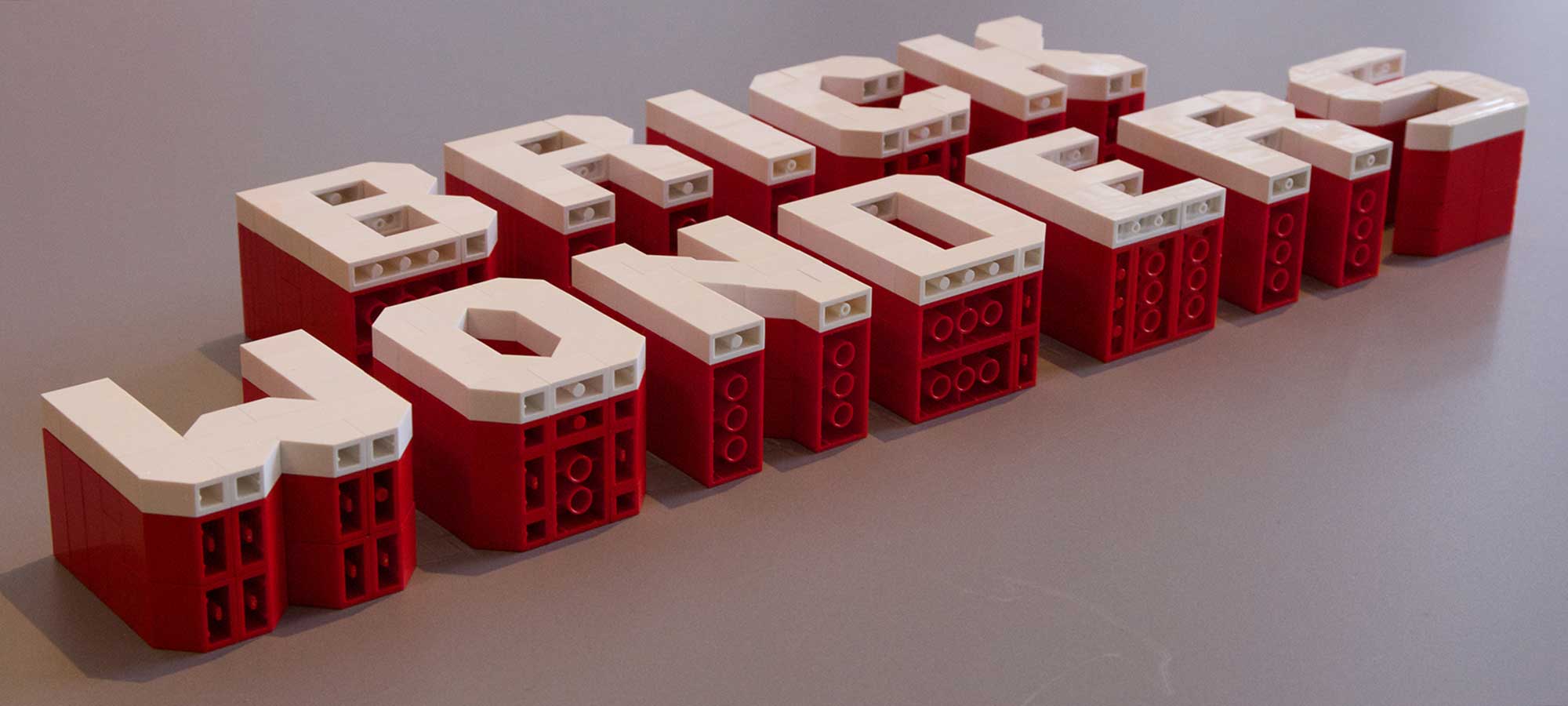
    Brick Wonders was the second exhibition at Harley by artist Warren Elsmore. In it he recreates the seven wonders of the world entirely out of lego, as well as a diverse range of seventy other models with different technological, scientific and educational messages. My favourites were the quite gruesome operating theatre and hypodermic needle, which looked worryingly realistic, and the map of global fibre optic cabling that enables the internet we all rely on in the 21st Century. The breadth of content made for a brilliant starting point for many conversations with younger visitors about a whole host of topics.

    The exhibition appeal was well considered, with a lego graffiti wall, together with a lego trail around the Portland Collection. The collection is breathtaking, with many pieces with significant cultural relevance, such as the earring worn by Charles I on the day of his execution. it spans a range of themes, such as horse paintings, miniatures, jewellery, books and household silver. Given this side of the gallery may have less appeal to kids, a lego trail extended around the space, with small lego figures located alongside different objects. This layered fun and engagement for children into what could be a wholly adult space and allowed the grownups a chance to explore without too much complaining.

    We finished our trip with a visit to the Harley Cafe, located just across the square. The cafe’s food is excellent quality, with many items able to be made gluten free at short notice. The cafe is one of the most accommodating for guests with food intolerances, as well as providing one of the widest GF choices I have found in the midlands.

    For anyone visiting the East Midlands who is taking a look at Chatsworth, I urge you to make the short hop across Derbyshire and check out the Welbeck Estate’s Harley Gallery as another must see!