Jenn Layton Annable

Jenn Layton Annable

Writing: life, research and things that grow.

Category: Uncategorized

  • Air and light and time and space: how successful academics write (a book review)

    Given I am about to begin writing my dissertation the process of ‘how’ to write, as in, finding the time, space, company, motivation and craft to write are of interest to me. Writing has always been an agonising, if increasingly more rewarding process, as I find my own style and confidence in the feedback that I receive.

    Academically I know that I produce good work; well-referenced, analysed and synthesised arguments, but it is always answering someone else’s questions. At undergrad’ level, it is just regurgitating someone else’s work but now I have hit master’s level and I’m beginning to define my own interests, ideas and research the writing process is changing. It is taking on a life of its own, like my research itself.

    The book I am reviewing is a great introduction to the art of writing. It divides itself into four subsections that approach writing from different perspectives that I hadn’t really thought of as the novice researcher than I still consider myself to be; behavioural artisanal, social and emotional, The author, Helen Sword, herself a seasoned writer, based the book on a comprehensive piece of qualitative research that included interviewing one hundred academics from around the world about their writing practice; its ebbs and flows, the benefits and challenges, with forays into pure abstraction such as exploring the metaphors academics used for their relationship with their writing. This was complemented with a further body of questionnaires that expanded out the data set to encompass a considerably wider scope of writers in terms of their professional status and career state.

    I found the tone of the book to be light-hearted. It bestowed upon me a sense of comradery as a new recruit joining the ranks of academic authorship. It was heartening to see battle-scarred veterans still describing some of the struggles I have whenever an essay deadline looms.

    Some of the perspectives were different to anything I had considered before. The struggles of those academics working within English as a second language shone a light on the inherent language bias that still exists in so many aspects of our global life as human beings. In some ways, the struggles of those coming to their work from very different cultural origins seemed to echo those I feel when thinking about how much of my own lived experience to seed into my writing. I struggled whether to use ‘I’ or not for weeks in my research essay. It was only the support of a very knowledgable and experienced tutor, who both has oodles of academic as well as lived experience of mental health distress to reassure me that it was the right thing to do.

    The different experiences of writing that I can bring to bear on my current development as an academic were also things that I had not considered before. Working as a graphic designer, copywriter and web designer has developed a skill set in me that I draw upon regularly in my own writing. Being autistic is a blessing and a curse. I am able to zoom down into the detail to an infinitesimal scale, and my proofreading is also pretty damn good after working as an account manager. But I struggle terribly with anxiety and cannot often summarise what I am going to do, or even know where I am headed in my writing because I don’t have the structure and context to know the destination. I have just learned to trust my instincts that the end result will usually be pretty good, and ultimately enjoy the journey on the way.

    If I were to sum up Air and Light and Time and Space, my best attempt would be to describe it as a book about the philosophy of writing that ultimately has many gems for living as well. the habits of ‘lucky’ writers and academics; noticing opportunities and building networks, trusting their instincts persevering in the face of rejection and criticism and seeing the positivity in challenging or difficult circumstances. These are habits I have cultivated myself in the last six years of being mentally ill and which I am finding also serving me as I recovery and carve out a new professional niche for myself. Similarly, the advice to do something creative or expansive before writing as a means of opening the mind rung true when I considered it in relation to the time I have spent on my allotment and riding my bike in the countryside. Not all the advice was as relevant, but this is the beauty of this book. I suspect that there really is something for everyone.

    Overall I loved it (and have decided to write this review about 15 pages from the end). The organisation of the sections, together with the author reviews, very personal, and sometimes vulnerable, author contributions, with practical ‘try this’ sections and a brilliant list of further reading that is interspersed into the text rather than being lumped together as the end, weave together into a lively and colourful consideration of academic writing.

  • Social change, and how it is like making sand.

    This week, alongside several other people, I am about to embark and what will probably turn into a lengthy and complex complaint regarding my treatment within the NHS.

    This is sadly the third time I have had to undertake such a journey. The previous two related to both my experience as an inpatient and also being misdiagnosed. The latest, slightly different, is about my experience as a volunteer. 

    This kind of thing makes me very sad. 

    Despite all the policy and rhetoric, the NHS is really crap at integrating people who have a lived experience into the fabric of their organisation. So often it is just tokenistic and a tickbox exercise. in this case however, given that resolving this matter is a new special interest for me, I have the patience and motivation to see it through. I was really passionate about the work I was doing and had some amazing colleagues that I worked alongside. I owe it to them, myself and anyone else who is recruited after me to do my best to make sure things improve.

    Speaking about it to friends this week though who were quite cynical and predicted ‘nothing would happen’ made me reflect upon what I do though.

    The answer I have reached in response is that social change, change for marginalised individuals and communities, does happen but it is like the sea slowly grinding the shore into sand. We know it happens because we understand the concept of coastal erosion. We can’t actually witness solid rock slowly transforming to tiny grains of dirt though, and this is what social change is like.

    Observed across years and decades, the impact of things like the Independent Living Fund, Civil Rights Movement and the Mad Pride cannot be denied. People may not have perfect lives, but we are not locking those with physical impairments up in institutions and mad narrative is taking a place at the table in academia and mental health practice.

    So rather than live a hopeless life and take no action, I would rather consider myself a tiny wave in a vast ocean of people who are all chipping away at a cliff of injustice and discrimination. To all intents nothing may not be achieved with this one person, but people will think more and differently next time.

    I may only create one tiny grain of sand from this rock, but hope this legacy will join thousands others so other people in the future can live a life more free of pain and suffering than mine has been.

    Live with hope. It’s what makes life worth living.


  • My United Kingdom travels

    My United Kingdom travels

    In amongst all the Brexit anxiety and heightened awareness of the climate damage that air travel causes I have tried to spend more time exploring the United Kingdom this summer, rather than relying on the old fall back of a cheap package holiday.

    Time away this summer break has been particularly important. Last summer, most of 2018, was spent rectifying the abysmal state the property that Derby Homes let to us, was in. This affected nearly everything that was important in my life. My mental health, my relationship with my son and partner, and my allotment. The latter is just a case of pulling up some weeds, but my health and my family have taken more careful consideration; namely some respite and some dedicated time spent together one-on-one.

    M and I spent a week together staying with friends of mine who moved to Totnes in Devon twelve months ago. The southwest really is a paradise for little boys and we spent our time peering into rockpools, crabbing off harbour sides and building sandcastles. M also seems to be developing a fondness for poking through charity shops and bought some fabulous items from a tiny antique shop located on Totnes High Street.


    More recently I took myself off to Glasgow for a week of culture sans children. After locating an amazing Victorian tenement apartment deal on Airbnb I submerged myself into a five day extravaganza of culture, art, food and fresh air.

    I had never visited Glasgow before this visit, or even Scotland. I was extremely surprised. Given the cultural stereotypes that exist about the Scottish (Glaswegians in particular) the exact opposite appeared to be the case, both of the city and its residents. Glasgow is a city with a style and beauty that is all its own. Given its association with Charles Rennie Mackintosh it is easy to say that would be the case, but walking around, the relationship between the architecture and art, and what we know as the ‘Glasgow Style’, is more symbiotic. Things that I identified as ‘Mackintosh’ existed every day in the city before he began working there, and so I think that the city influenced him as much as he eventually  influenced it.


    I am looking forward to visiting Edinburgh inasmuch to see if my suspicion that there might be a similar relationship between it and Glasgow and Madrid and Barcelona is true. When visiting the first and second cities of Spain, Madrid felt very regal and austere. There was definitely creativity and pomp but it was also extremely regulated, with a high degree of protocol. By comparison there was a lightness of touch to Barcelona that I really appreciated.

    I wonder if the same might be true of Edinburgh and Glasgow too

    Patricular highlights of both trips for me were; in Devon, the ’round robin’ boat trip between Totnes and Dartmouth; crabbing in Paignton harbour, and having a coffee there thinking about my ex-partner Ian, whose birthday it was. He died last year and was the last person prior to this that I visited Paignton with. Mostly though, spending time with my boy; even the car trips were fun for that reason.

    In Glasgow, cafe Zique, the Hanoi bike shop (try the ‘Feed me!’ option for lots of delicious surprises). The accomodation we stayed in; masses of character and perfectly located for walking around, the Botanical Gardens, and the Kelvingrove Musuem and Art Gallery where I learned about the Scottish Colourists and the Glasgow Boys.

    I’m looking forward to exploring more of the UK in the next year or two.

  • Support spaces in Derby

    There are umpteen different local and national phone lines available for people who are experiencing distress or looking for someone to talk to, but having been in this situation myself these can often feel lacking. I have recently become aware of several community based projects specifically designed to support the citizens of Derby face-to-face, at different times of the week and day.

    Night Bus, Chatterbox Cafe, Allenton, Derby.

    The night bus has been set up to give people in distress or who are struggling a place to go between 2200 and 0100 every Friday and Saturday nights. The nightbus is hosted by the Chatterbox Cafe, St. Martin’s Church  and has been developed by a local Community Interest Company, Headhigh (the website doesn’t contain a great deal of information and this is one of the sad things about the night bus, it isn’t really being promoted very much).

     The night bus will be staffed with volunteers who have recieved training to support those experiencing distress or mental illness, many of whom have had similar experiences, so there is a great element of peer support in place. People visiting will be able to find out about local services tha are on offer, or else just have a chat and a warm drink if they prefer.

    The cafe timings have been decided based upon research that identified these times overnight at the weekend as when people can struggle the most, together with the least support being accessible.

    Hannah Fields Community Garden, Normanton Lane, Littleover.

    The Hannah Fields Community Garden is a fab little project that currently opens 1000 to 1600 (weather permitting) on a Thursday, Friday and Saturday. Managed by another local CIC and run by a trained mental health nurse, Angela, the organisation has taken a previously neglected piece of urban greenspace and is in the process of transforming it into a thriving community garden and workspace. I have visited once, and met Angela on a number of occasions and have been really impressed by what she is aiming to do. None-clinical solutions to poor health and illness and prevention are at the top of the list of current priorities for the NHS. Projects such as this tick all the boxes for how better health will be achieved in the future. Specific strands of the project include training in forest school activities, growing and donating food to the local community and also working with local groups to develop sensory spaces, as well as being a haven for local wildlife.

    Thrive Nutrition, Boyer Street Community Rooms.

    Thrive Nutrition are part of a wider collective that brings together a range of people with different skills and experiences. The fab Lucy Kay, a nutritional therapist who practices in Derby runs a regular monthly event at Boyer Street which discussed a whole host of topics and naturally touches upon the benefits of good diet and nutrition for mental health and general wellbeing. Although not strictly a place of support for mental health, Thrive is a really great resource for people wanting to learn about how diet and lifestyle can support recovery from and prevention of mental illness and distress. There is also an opportunity to meet some fabulous and really friendly people, so encouraging social interaction and friendship.

    Thrive also have an active facebook group with over 200 members, which is a great place to ask questions and find out about local events.

    Local Vocals Community Choir, Westend Community Rooms.

    A weekly, non-auditioning choir that was set up to encourage singing and allow a wide range of people to access the mental and physical health benefits of music.  Although I have not been to this personally I am very aware of the research that supports the benefits of community choirs such as this. Another important aspect to these choirs is that they created destigmatised spaces for those with mental health distress or illness. So often, initiatives like this are set up with the primary purpose of being places for people with ‘mental illness’ to go, and so create a place that is seperate from the local community and people who are not having similar experiences. In opening up such projects everyone benefits, with the dual advantage that exposure to people with mental distress is increased and discrimination and strerotyping are successfully challenged.

    The choir meetings every Wednesday evening between 1930 and 2130. I can find no mention of costs to attend.

    Derby City Life Links

    Derby City Life Links is run by the fab Richmond Group, a mental health charity that also runs the Crisis House on Old Burton Road; a supportive non-clinical environment which lives its recovery based values.

    This latest venture in Derby by the charity was only something that I recently became aware of, but it looks as though this might be the beginning of a number of recovery based projects in the city, such as organised peer-support and recovery college type classes. The website is an wealth of information of other initiatives and projects going on in the city that can offer different kinds of support (check out the ‘self help’ tab at the top of the page to activate a drop down menu with options). There is also a dedicated page for recovery education, wih specific classes looking at managing anxiety, mindfulness and meditation, confidence and relaxation.

    The last service of note is the creation and support of a number of peer-support groups. A full list of those currently in existence is available, with group options catering both for interest and condition-specific accommodated. There appears to also be opportunties to seek assistance for those wishing to set up their own group

    Happy Cafe, Derby QUAD, Derby City Centre.

    Part of a national initiative instigated by Action for Happiness, Derby’s branch of the Happy Cafe movement is hosted by Derby QUAD on every third Wednesday of the month, between 1900 and 2100. The space is created for people to come together to discuss and support happiness and general wellbeing, with particpants beng sure of a friendly welcome and drink. The only downside is that the drinks must be paid for and the prices are reflective of the city centre location. 

  • Derby’s food heroes

    Derby’s food heroes

    Having lived in Derby, albeit in two houses now for nearly seven years, I am reaching the watershed where it will overtake, in the next eighteen months, the places I have previously spent the longest in my life. I have had a rather nomadic existence up until now but overall I like Derby. It has got a great mix of small city and accessible countryside with public transport and road links that make getting to other places really easy.

    One thing I particularly enjoy is that there is still a myriad of small businesses that serve not only the English community in the city but also the different ethnicities that have chosen to make their home here. Between them, it is possible to eat really cheaply and healthily, whilst enjoying the benefits of personal service and keeping money for the best part in the local economy. Here is my list of the top ‘Derby Food Heroes’ that I would recommend for food shopping:

    Gerald Langley Greengrocers, Osmaston Road.

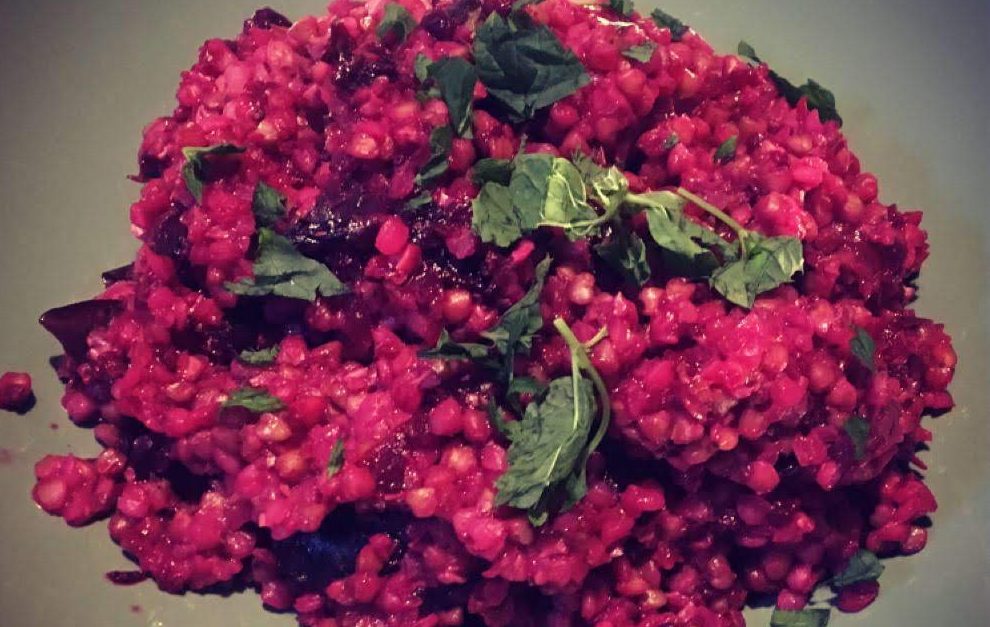
    I have shopped at Gerald Langleys since I moved to Derby in 2012, and was pleased to see the business revitalised when taken over by its current owners. As well as an amazing selection of fruit and vegetables in the shop, the business now offers a free delivery service which is a great addition to the local community for people who may be less able to get out and about. There are regular ‘deals’ featuring two fruit or veg for £2.00 which are possible to mix and match within. I particularly like the fact that there are often unusual vegetables and fruit for sale, depending on what is available at the wholesale market. Recently I have tried multi-coloured beetroot and carrots and pineberries. Gerald Langley’s also make eating seasonally and locally much easier as all product growing regions are listed and a good proportion of the produce is grown locally within the East Midlands.

    Puri Food Store, Stenson Road.

    Considering the latest craze for bulk sold goods Puri foods are ahead of the curve for this trend, having sold dried goods from sacks ‘just like back home’ for several years, at fantastic prices too. The business owners are always really friendly and the shop sticks not only a huge range of nuts, spices and pulses that you can buy in bulk straight from sacks but a massive range of other items that are essential for me on a gluten-free diet. These include many different GF flours (gram, coconut, rice, water chestnut), alongside really beautiful Indian chutneys. paneer, live apple cider vinegar, organic coconut oil and natural live yoghurt. The fresh food section supplies beauties such as fresh tamarind, Medjool dates sold loose again and fresh turmeric root. Puri food has almost become my ‘local shop’ the place where I pop in for milk and a chat if I want to get out of the house for a walk and some fresh air. A real gem and almost impossible to discover unless you walk in because they have no website.

    Terry’s Butchers

    I only discovered Terry’s (named after the original proprietor and now run by his apprentice Ram) after moving to Sunny Hill and have once again got the pleasure of a local butcher I can walk to. Terry’s range of products reflects the diversity of his customers, selling the typical English favourites of pasties, pies and honey alongside prepared Tandoori curry, mutton and goat meat which I am looking forward to trying soon.

    Every time I have visited, nothing has been too much trouble and Ram has taken the time and care to make sure I have everything I needed. Alongside a huge range of meat products (some of which do require preordering) Ram also sells a range of bread, eggs and basic vegetables.

    Supersam, Pear Tree Road.

    I LOVE Supersam. This shop has got a meat and cheese deli the length of the back of the shop and the most amazing on-site bakery that sells cakes that put Bird’s to shame, in terms of size, quality and price. If you are into breads made from different flours there are a variety of sourdough and rye loaves to pick from. I get a whole lot more of my gluten-free shopping from here, including potato starch and buckwheat flour (both essential for GF home blended flours), plus buckwheat groats, an amazing range of herbal and fruit teas and healthy rice cakes about a fifth of the price you would find them in Sainsbury’s just up the road. The spirits section is second to none. If you are a vodka fan I urge you to venture forth and have a gander as the range of Polish and Eastern European spirits is huge. Quite a few people would be put off, I know, by the fact that many of the labels and staff are not English but please don’t let this stop you. I have always managed to make myself understood and google translate can go a long way in deciphering labels.

    Chung Wah Chinese Supermarket, Wilmot Street.

    The last of the food heroes I have discovered in Derby and an absolute must if you like Asian food. Chung Wah caters for a host on different Asian cuisines, including Japanese, Filipino and Thai from what I have seen on the shelves. It is also another regular stop off for me as a gluten-free shopper as it stocks a massive range of GF noodles (sweet potato starch, corn starch, mung bean starch or brown rice?) as well as everything that I need for making homemade kimchi.

    The staff have always been incredibly friendly and helpful and I have found some unusual and fun presents for friends, including Japanese Sake wine and chopsticks for kids. The last great benefit is the free parking which is located just across the road, meaning that there is no need to pay through the nose to get your goods.

    Dumelow’s Dairy

    Dumelow’s are a dairy farm that sells raw cow’s milk from a chilled automated dispenser at the entrance to their farm. Raw milk can only be legally sold directly from the farm in the UK. The ethos of the store is really sustainable; the cabin includes reusable glass one-litre bottles that are great value and useful for a whole host of stuff. I also use mine for storing iced tea in the fridge. Alongside the milk, the farm sells a range of honey and other jams from different local makers and operates with an honesty box. The dispenser is available until 9pm each day.


    That’s the end of my list of food heroes for the city of Derby. I know that new shops often come and go, so if you know of anywhere else worth a mention please stick it in the comments below.

  • The ethics of ethics

    So I have to make my position very clear here.

    I am in no way denying the need for an independent ethics approval process, within either the academy or the NHS. The need to ensure absolute protection for vulnerable groups and individuals is paramount. Ethics reviews also ensure research methodologies and rationale are robust. As such this process maintains and ideally improves the quality and scope of research over time as long as those reviewing submissions are up-to-date regarding the prevailing attitudes of the area of study they are examining.

    Bringing me to the point that I want to make.

    I am studying Mental Health Recovery at Masters level. The main values and principles of this concept are those of being person-centred, of empowering the individual, of moving away from the medical-model and avoiding labels. Instead, the philosophy of recovery is about allowing people the benefit of a self-determined identity. Most importantly, to me at least, it’s about returning to people their sense of agency and avoiding institutionalisation.

    Why then, when I discuss with my supervisor my final dissertation do I find out that the fact that I am working with autistic people, automatically ensures that I have to get NHS ethics approval?

    Being autistic is a difference, not a disorder, or an illness, or even a disability in itself. However, because the ‘label’ or God forbid, ‘diagnosis’ is made by a doctor this group of people that I belong to automatically classified as vulnerable.

    You can be autistic and vulnerable, no doubt about it, but you can also be neurotypical and vulnerable. You don’t automatically need NHS ethics approval if you are working with neurotypical particpants.

    My project was a self-selecting group of individuals who would not be sought through mental health providers because I did not wish to skew my data. Biases in medicine already exist towards a male-centred presentation and the fact that more women who receive a positive diagnosis tend to have more mental health distress and more severe traits of autism means I would not be able to explore what being autistic means to those who also identfy as women some or all of the time. Furthermore, I also wanted to include women who self identified as autistic because this is often a group that is missed in the official understanding of being autistic.

    In both cases I was told I would need to seek NHS ethics approval, which usually takes six to nine months and therefore blocks my ability to carry out this research within the time constraints that I am bound by.

    It makes me really angry when a whole group of people have their identity co-opted by doctors, researchers and sweeping statements made about their functioning, wellness and support networks. Surely the point to a recovery focus is that we begin to understand the different needs of the people we work within research, as well as in mental health provision and support? We need to stop assuming that everyone is going to run into trouble or conversely cope fine.

    Self-identified autistic women who are struggling, who do need support, are then denied such because they don’t fit the stereotype that has been perpetuated by doctors and researchers for decades. The need to categorise people absolutely not only denies vulnerable individuals and families support but also potentially delays research that could help change this situation for the better.

    Even though my masters would have been a small step along the path I hoped to tread, it would have given me a chance to commit to some exploratory research and scope out my ideas more practically for what I hope will become my PhD proposal. Instead, I have had to work within the confines of a virtual project which, although still a great chance to refine my thinking is not the same as actually testing some them.

    Ethics are vital for the safety of participants and ensuring projects are of the highest quality, but in their current form, which is still governed by medical-model diagnostic assumptions we still have a long way to go before we can say our research is truly recovery-focused. Ultimately it becomes another gate kept by the say-so of psychiatrists rather than the genuine needs of the people who are intended to benefit.

  • DLINKS library logo

    DLINKS library logo

    Derbyshire is a large county with a diverse spread of population and geography. Much of this is covered by the Derbyshire Community Foundation Trust, whose staff can struggle to reach a medical library in the course of their work, given commuting time.

    Collaborating to solve this problem, the three library services across the different trusts in the county have joined together to create the DLINKS (Derbyshire NHS libraries and knowledge service), within which staff from DCFT can use the facilities at any of the trusts in Derby City or Chesterfield. This also presents opportunities for the sharing of expertise resources and knowledge within all three organisations, a general direction of travel within NHS Sustainability and Transformation Plans anyway.


    I have regularly used the library at DHCFT since beginning my MSc and have in many respects become a regular fixture. Marie Hickman, the knowledge manager, approached me about developing the logo for the new DLINKS project, which I gladly agreed to do, calling in the help of Guy Evans another creative based in Derby.

    Guy and I initially met with the three head librarians for a brainstorming session. It quickly became clear that there were a number of concepts that required inclusion:

    • The three organisations working together collectively
    • The geographical basis across Derbyshire
    • The representation of knowledge and learning
    • An abstract image that would be distinct from the branding of each individual Foundation Trust

    After some sketching, the idea of a Venn diagram type logo was settled upon and we suggested the colour scheme from the Derbyshire flag of bright gold, blue and, green, reminiscent of the landscapes of the county.

    Guy and I developed a number of different design iterations, working remotely given the widespread of the stakeholders. A final brand was agreed, together with the placement of the project name.

    The logo design concept was taken forward into all design for the print and digital presence for the project. The website for DLINKs, including the logo, can be viewed here www.dchslibrary.co.uk.

  • The beginning…

    The beginning…

    This…

    Researchers cannot assign value to one meaning without acknowledging the role that they personally play within this construction (Guba & Lincoln, 1989). Qualitative research has usefully attempted to acknowledge this limitation through reflexivity (MacBeth, 2001; Willig, 2001). Reflexive research requires an awareness of the researcher’s contribution to the
    construction of meaning and the improbability of remaining neutral, impartial, and unconnected to one’s subject (Nightingale & Cromby, 1999).
  • Autism Dialogue Conference 2018

    Autism Dialogue Conference 2018

    This year I have participated in the Autism Dialogue programme developed by Jonny Drury, in Sheffield, based upon Bohm Dialogue principles that are widely used in business and academia. The inaugural conference took place on the 14th December 2018 and I was invited to speak about the impression that AD had on me. The process of participating in Autism Dialogue has created a lasting and positive change in me that is still working its way through.

    —————————–

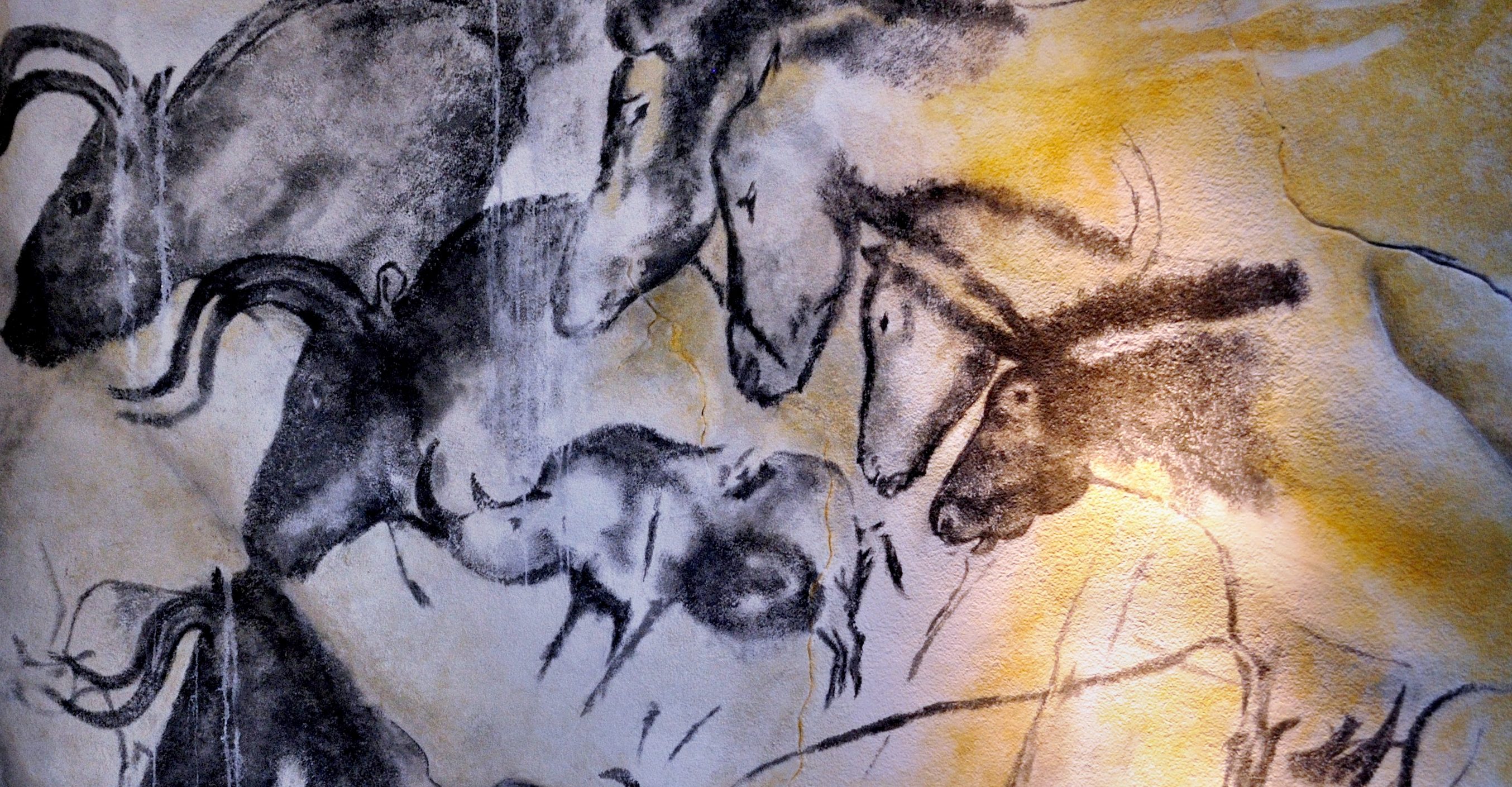
    The cave paintings at Chauvet in France demonstrate a new development in human artistic ability around the time of the major ice ages in Europe. These incredibly beautiful, photorealistic depictions were vastly more sophisticated than the previous simpler images, which we might typically recognise if we were asked to think about such early art.

    Researchers from the University of York have aligned this new ability within a cluster of others that emerged at about the same time. Namely those of being able to focus intensely on one thing when making complex flint tools, to remember large swathes of terrain in order to hunt for food  that may be under cover of snow and over a much greater area because of animals becoming scarcer, and the ability to enjoy one’s own company more, because of longer darker nights and poorer weather making going outside of your shelter risky and uncomfortable. The same researchers have examined contemporary populations and have identified autistic people as being the closest fit in our own abilities and preferences to these new iterations of humanity that prevailed about thirty thousand years ago.

    So to make this point as literally as I can, it seems autistic traits developed as a result of natural selection in order to give the people with them an evolutionary advantage under very specific conditions. We, autistic people, may have been instrumental in ensuring the survival of our species, which is a pretty big deal.

    Thus, both modern science and art can appreciate very vividly the contributions an autistic version of humanity has made for the benefit and advancement of all of humankind.

    I reflect with sadness that the same cannot be said for many of our peers today in the 21st Century where being autistic  is negatively stereotyped, stigmatised and regarded as a burden because of the cost associated with supporting people who are disabled by their inability to live in a world that can be distressing for them but which is also convinced of it’s own inherent validity in many instances.

    I, we, have experienced a plethora of emotions, both collectively and individually. All of these became contents for the vessel of exploration that Dialogical Practice revealed itself to me to be. Perhaps the thing that struck me the most was the intensity of the perception in the room. At all events, autistic people were in the majority and our monotropic concentration that was focussed on the shared dialogue was palpable in its intensity. Similarly, the gentle stimming that many autistic participants subtly engaged in was catching. Our nonautistic peers commented how they felt comfortable engaging in their own stims which they would publically pack away in the presence of others.

    I feel the Autism Dialogue events enabled a space for all human participants to experience autism in their own way, This unadulterated, unmasked undiminished autistic experience allowed us to explore its nuances and limits in a very visceral way. Ultimately though I left with a greater sense of who I am, a sense that there are others like me and that there is a beauty in my difference and our differences that has the potentiality to make a difference that I hope, at some point will be recognised as universally as the cave paintings in Chauvet are today.

    Autism is a construct; a descriptive word. Today people with these characteristics are widely considered disabled and often lacking. Thirty thousand years ago we may have been revered as mystics, artisans or clan hunters if current research is correct. This makes me think that little by little and using tools and experiences such as Autism Dialogue we have a chance to chip away at the negative perception ‘Autism’ creates and transform it into something powerful and positive once more. Autism Dialogue has given me hope for the future in seeing myself and my community in this way and a new understanding of autistic beauty. I would like to thank Jonny for his work in making this happen and allowing me to be a part of it.

    Image: https://upload.wikimedia.org/wikipedia/commons/0/0d/Chauvet%C2%B4s_cave_horses.jpg

  • People are more than their diagnoses.

    People are more than their diagnoses.

    “It was this prognosis of doom, this life sentence, this death before death that I instinctively rejected when the words “You are wrong” formed silently within me. With the wisdom of hindsight I understand why this moment in the psychiatrist’s office was a major turning point in my recovery process. When I rejected the prognosis of doom I simultaneously affirmed my worth and dignity.”

    “And just as quickly as I turned away from the prophecy of doom, I found myself asking– so now what? In other words, I turned away from a hopeless path but also, at the same time, had to turn into something.”

    Pat Deegan

    The narrative of Pat Deegan recounting her own recovery journey from a place of deficit-based hopeless diagnosis has long inspired me, both personally and more recently, professionally.  Pat’s own recovery mission, to ‘become a doctor and make the mental health system that abused her work properly’ is similar to what I wish to achieve for autistic women who have been through a similarly negative experience with their own mental health and diagnosis. I have found a similar inspiration in taking the crappy life experiences I have had, which have nonetheless also been transformative, and delivered to me far more meaning and purpose than I could ever have found in my old life, and make something better for others out of them.

    Professionally this is shaping into a PhD proposal that I hope will enable autistic women to be able to think more positively about themselves and their experiences or history. I wish to create an alternative narrative to that of a medicalised diagnosis; of which even the name makes you sound diseased. Most importantly I want this to be something that all women who identify as autistic can utilise, not just those who come to this place via a medical diagnosis. In this way, I am beginning to open out the idea of self-identification as a valid means of describing oneself as autistic as well as having the same bestowed by a doctor whose own perceptions of just what ‘autism’ is might be skewed by the research bias towards gendered male presentation anyway.

    I want to focus on women because I think from what I have experienced and what others have told me about, that this is the group that gets one of the bummest deals of all bum deals. In thinking about women I have also wrestled with the concept of gender and so have had to accept that just as I find it intolerable that clinicians get to decide who is and is not autistic so it is not my place as a researcher to decide who is a woman or not. This is part of my decision to work within the participatory paradigm. Not only do I involve others with lived experience at every stage of the project, but I also have to accept that they will decide the factors of the research question itself. If someone with cis-made genitals identifies as a woman some of all of the time who am I to denigrate their primary experience?

    Brown, Catana. Recovery and Wellness : Models of Hope and Empowerment for People with Mental Illness, Routledge, 2002. ProQuest Ebook Central, http://ebookcentral.proquest.com/lib/herts/detail.action?docID=1099395.