
A few pictures from my travels in March 2017 🙂


A few pictures from my travels in March 2017 🙂
I’m currently supported by a complex team of multidisciplinary staff which include a Community Psychiatric Nurse in the Recovery Team, a specialist Social Worker in the Mental Health team, a Community Psychiatrist, a Talking Therapist working with me in Eye Movement Desensitisation and Reprocessing, and a specialist Occupational Therapist that helps with sensory processing issues. I have been well supported in the last 12 months by my therapist and CPN, however at the end of January, to say the wheels began to fall off is an understatement.
I underwent a course of intense therapy that resulted in part, with me being admitted to a crisis house for 2 weeks. My illness delayed a number of vital actions I needed to take such as finding and recruiting a new personal assistant to help me at home, and so my recovery has been stressful but I have got back to good health. Since then, the really frustrating and sad thing at the moment is that the most stressful part of my life is attempting to get any sense and commitment out of the mental health services I work with
About 5 weeks ago (bearing in mind I was suicidal on the 21st February) my CPN let me know by email that she was starting a new job and could no longer have me on her caseload. I also found out that the colleague I was being transferred to was on a temporary contract via a recruitment agency. I am autistic and so unexpected change is always a big no-no for me, as well as really needing consistency and familiarity. Obviously all aspects of this new development raised issues for me, not in the least because my new CPN could leave at any time with little notice.
After I fed-back via the PALS service this decision was reversed, however I still have no idea who the replacement might be, and just when the transfer should be taking place. This has been ongoing for about the last 5 weeks. Reason given is that the manager that needs to make the decision is currently on holiday.
Additionally, a week later, my therapist who I work with via the Talking Mental Health Derbyshire, informs me that the decision has been made to transfer me to clinical psychology as the level of distress I had demonstrated meant they could no longer work with me.
I just want to put this into context. I have been discharged, halfway through a course of therapeutic treatment, with a therapist and an environment that I am familiar with and trust in, with no discussion about what I need or want. As far as I understand, the transfer to clinical psychology could mean beginning at the start of another assessment period with a new therapist who may not even be able to offer me EMDR therapy. This is after I have spent 18 months doing just this with the IAPT services, following a referral from the specialist nurse consultant who diagnosed me with ASC. However as nothing has of yet been provided in writing as per my reasonable adjustment request I am not sure either way. The interesting thing is that my conditions haven’t changed, my presentation hasn’t changed, it seems like the only thing that has is the perception of me as a patient in relation to services provided, and that entitles me to be dumped into another area without the least warning or thought for how this will affect me personally or the work I have been doing for unresolved trauma so far.
When I found out about the transfer to clinical psychology it only came a week after the email about my CPN changing. Putting this into context , I don’t deal with unexpected change well, so to get the double whammy I’ve just outlined resulted in a full meltdown in my therapy appointment. Bonus for me. The other hilarious thing is that this kind of meltdown (which is well documented as a trait of ASC when people with the condition are put under enough of the right kind of pressure) is just what is being used to justify a diagnosis of Borderline Personality Disorder of which you will hear more shortly.
I asked for a meeting in the following 2 weeks to discuss this. Fast forward 3 weeks and guess what? Nothing. Another contact this time via phone a week ago. “Someone will be writing to you in the next week”. Guess what? Nothing.
The thing that really frustrates the hell out of my about this is that every little thing that you do becomes pathologised, like the meltdown I mentioned, leading me to the the last issue I am debating whether to take further or not. My diagnosis of Borderline Personality Disorder.
This was given to me by a Crisis Team psychiatrist in 2015 sometime. I would not know or have found out about this other than for a letter I requested be written in support of a benefits claim I needed to make.
At the time the diagnosis for BPD was made I already had a well established diagnosis for Autism. Despite the fact that there is well established understanding amongst the medical establishment that women on the spectrum can be misdiagnosed with BPD (see links below) I am still no further to resolving this that i was in December 2015.
Despite me presenting this and other evidence about how I behave being explained within the framework of ASC (which I am happy with the validity of) 2 years later I am still waiting to even be seen by a psychiatrist who has got enough consistency of contact with me to begin to establish if the diagnosis is valid or not. I just want to be clear about the BPD diagnosis as well. It was made by a crisis team doctor and his team who, given the nature of their role, cannot really say that they had an opportunity to reach a balanced and historical point-of-view of me. No psychiatrist in Derby has even seen me more than 3-4 times. No-one has ever taken a full case history, no-one has asked me about my presentation in childhood, or my twenties. The only time the crisis team doctor in question ever spoke to me prior to making his diagnosis about this was after I had been dropped to the adult psychiatric unit in a taxi because I was too distressed to drive. I was then left for nearly an hour in a highly stimulating environment, which rendered me needing to hide in the reception area behind the seats, curled up in a foetal position with my eyes screwed shut and my hands over my ears. I did not probably even have mental capacity to have the discussion about BPD or any other diagnosis, but, like most staff I have encountered, because they know very little about high functioning women on the spectrum, they were unable to recognise this.
I have had several contacts with my latest community psychiatrist, who is a nice guy and also a locum. We have discussed my BPD diagnosis and how it could just as easily present as one thing as another. I guess what is boils down to for me is that no-one has ever actually explained to me satisfaction just how I meet the diagnosis of EUPD.
Admittedly I have some of the traits, such as infrequent self harming episodes and occasional suicidal behavior, however I have a clear idea of who I am, my goals and relationships in life, I am self disciplined, and generally not aggressive. I do not have issues with recreational drugs, alcohol or binge eating. I am in a stable relationship and no issues with my parenting have ever been identified, despite several referrals into social care because of how ill I have been in the last 4 years. I have also been offered no specific treatment for this personality disorder that supposedly I have despite the 2 year old diagnosis.
I’ve also done some reading on the DSM5 in relation to personality disorders and their diagnosis in general. There are a few gems in relation to me:
Everything that you do becomes a trait of your mental health issues. I am conflicted, distressed and now feel I am becoming traumatised about my BPD diagnosis and how it has been dealt with to date. I know on one level that it doesn’t make any difference to me as a person or my personal relationships, however it still doesn’t sit with me right. One day I can say it doesn’t matter I’ll leave it, but there is still a niggling feeling that this just isn’t the right thing to do, that I should fight for what I think is the right diagnosis. However, the fact that I have changed my mind several times about this and discussed these changes with my CPN is held up as an example of being impulsive, and used for further justification for the original diagnosis, just like my infrequent meltdowns are held up as example of anger outbursts.
At the moment I feel like I am ready to reduce the amount of support offered to me, but trying to get a coherent plan in place to achieve this is proving impossible. It is not right that people who are vulnerable (and I don’t consider myself to be that vulnerable at the moment) should have to chase and chase and chase to get anywhere. I am at the point now where if I can’t get some kind of coherent decision made I feel like the only option left open to me is to discharge myself from all services, as the amount of grief this is causing currently far outweighs the benefits.
Should this really be it though? How on earth can anyone say that good mental health provision is being made when I am trying to challenge a diagnosis and put in place a plan to reduce support and i can do neither in realistic time scales. it has been nearly 18 months for the BPD diagnosis and over a month for sorting out plans, and I am no further ahead in either camp.
The only reason why such crappy and piss-poor service goes unnoted it because it is not spoken about, and because of the stigma around mental health. It’s time we changed this and I’m proud to add my voice to the growing number who are talking about what is wrong with mental health provision and just what needs to be done to change it.
(As a small and positive post-script I would like to offer my thanks to Dom Cushnan who has encouraged me to blog about my mental health experiences. This is the first of these, and it is a really great step forward for me to begin to speak about what is and has happened in public for the first time.)
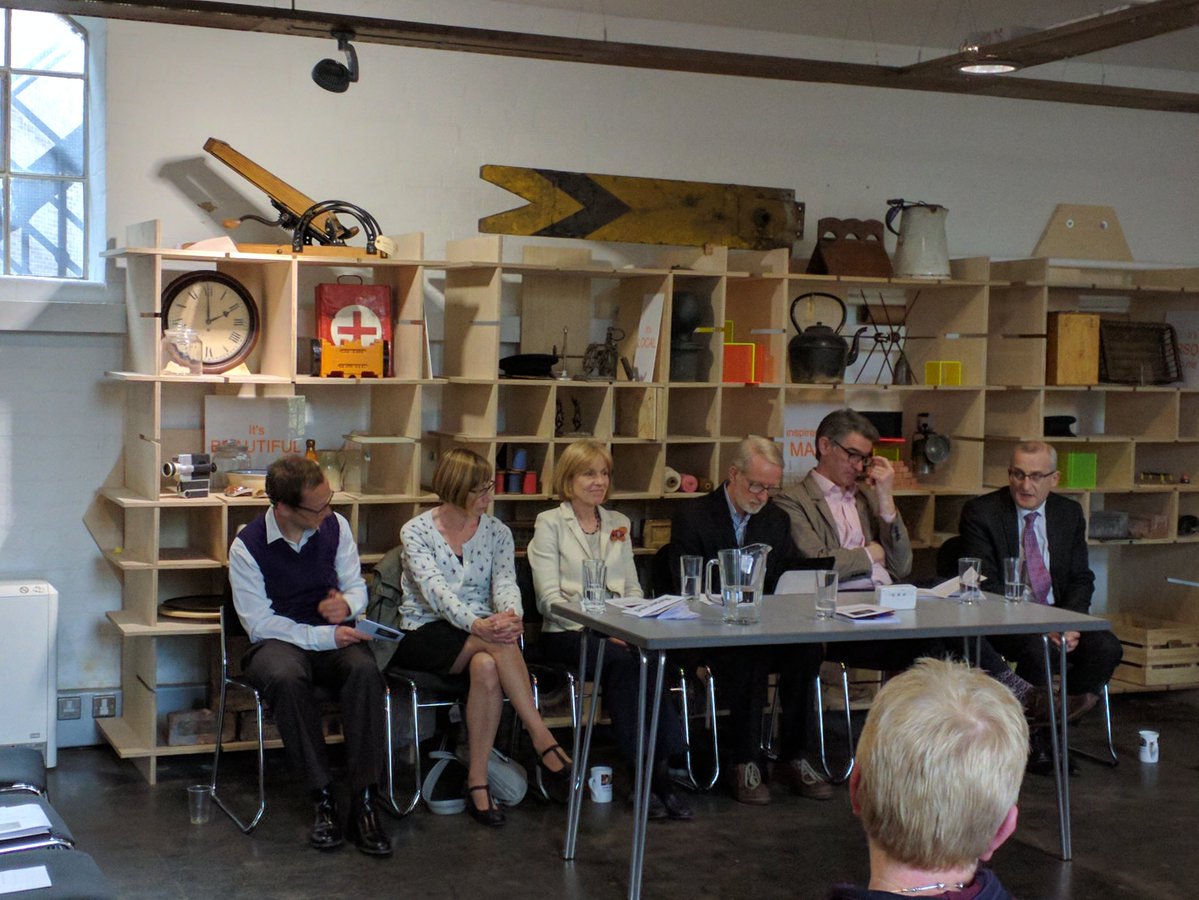
This evening I had the pleasure to attend the first Lunar21 of 2017 event at the Silk Mill Museum of Making in Derby. We had an excellent panel drawn from Derby and Nottingham’s diverse health and social care landscape, including the Chair of the Southern Derbyshire CCG, Dr Paul Wood and Professor of Mental Health and Social Care, Justine Schneider.The evening comprised of taking comments and questions from the floor, including those submitted in advance from people not able to attend on the evening.The timing was also particularly fortuitous as I have also recently been accepted onto an MSc for Mental Health Recovery and Social Inclusion. I have had a chance to experience some amazing learning and my horizons about just what work I might do in the future are beginning to open up.
One thing that was particularly important to me was standing up in front of a room full of strangers and talking about being really ill, including feeling suicidal when I was in the Crisis House in Derby last month. Although I have spoken about the topic to close friends and even acquaintances I have shied away from doing the same here on my blog in case people get the wrong impression. I suppose it is a hang up from my agency days when emotional ill health was considered a weakness and in many cases was preyed upon by the more fortunate, or simply more selfish. It was very empowering describing what had happened to people and one of the panel commented on my contributions that evening and said how important it was for people to talk about their experiences in mental health. She gave the example of how maternity services have improved because of women campaigning for better provision by telling their stories and the same needs to be done for this under-explored area.
I’ve spent so long trying to work out just what the hell I want to do or even can do that to have everything seemingly falling into place the way it is feels a bit weird. it is good to know that there is value in my experience and that I should be able to use it for the greater good. Like I said in my personal statement. I want to get better and thrive and help others like me get better and thrive in the best way possible.
The focus of my blog is going to slowly include more of my mental health experience in the future and also the work I am doing for my course and volunteering.
I have a lot more hope for the future and also faith in myself that I have for a long while.
So October has been a pretty busy month. Mylo has started school and has settled into his first half term. It’s given me a chance to take stock and re-involve myself in a number of projects at Derby Museums and further afield as well as picking up Lunar21 once more.
Firstly, I have been developing a series of volunteer badges with other makers at the trust.
The museum and art gallery have long suffered expensive and often fragile badge designs that did not really do justice to the collection or reflect the ethos of the Trust well. By contrast, the Silk Mill’s hackspace and maker studio produce outstanding and unique designs for each of the events that they host.

I created some prototypes with maker Graeme Smith. As these were well received, I took the project forward to the next stage. Working with Super Nature volunteer Andy Thornton, we have created a series of originally designed images that represent the Museum Trust’s collection. Currently we are at the stage where we have completed a first round of laser cut samples, working across the size and shape to make them consistent. We hope to have the final range completed for approval at the end of November, when I will complete a post for the projects section of the website.

I’ve also become involved with the Audience Development work at the museum. I was lucky enough to help facilitate a tactile tour for partially sighted visitors. From this came reams of really valuable information. The hope is that we can go on to develop a kit for this audience segment and run a similar experience for the Silk Mill building. At the time of writing these things are very much in consideration, but I am hopeful to be able to continue with this work as it interests me greatly, and perhaps even go on to work on accessibility and engagement for other niche audiences such as those on with ASC.

The last thing I have managed to help with was a call out on the Volunteer newsletter for citizen journalists to write about their experiences within the DMT. I sent across a couple of my blog pieces to Gemma, our lovely volunteer coordinator, and she thought they might be of some use to her in the future.
Last but not least, I have also been appointed to the Museum Computer Group Committee to assist with marketing and communications over the coming year or so, which I am mightily looking forward to. Watch this space for more information.
This afternoon I had the pleasure of assisting with a session to learn more about the audience experience at the Derby Museum and Art Gallery for visitors who are partially sighted. Having very different sense perceptions myself, because of having Sensory Processing Disorder (SPD) I am always curious about how others with different sense abilities to the usual, and my own, perceive the world. I was also curious to see how a ‘tactile tour’ compiled by a fully-sighted and neurotypical (NT) programmer would compare to the reality of a partially sighted experience.
Although the tour was created around sensory elements of the collection at Derby Museum and Art Gallery, the experience of the environment itself was much more insightful. Walking around with the group opened up a world of possibilities about how hazardous a space could possibly be, with changes in floor material as well as low level obstacles such as rope barriers at knee height all creating issues.


As well as learning loads about the visitor experience from a different point of view it was a chance to see how a museum relates to different audience groups and explores improvements. We spent a good five minutes in the disabled toilet discussing (certain aspects) of the user experience and where the pinch points might be – getting some rather strange looks when all seven trooped out one after the other!

I really enjoyed meeting the group of volunteers who shared their time and experience and I’m looking forward to the next part of the project.
On a blazing hot Bank Holiday Monday this August, I took Mylo up to the Yorkshire Sculpture Park to explore with the friend who accompanied me the first time I went nearly 8 years ago. The weather was terrible then. I remember drinking tea huddled into each other coats in an effort to remain defrosted. Luckily this time was considerably warmer, so I got to spend more time appreciating the sculpture and less time dodging the pouring rain.


The YSP is one huge art space set out over acres of beautifully landscaped gardens and natural English countryside. Originally a stately home, and then a college of art amongst other incarnations, the YSP are currently undertaking a sensitive and gentle restoration of the grounds and architecture. The sculpture and newer structures blend beautifully with what remains from the past. The overall affect, with the sculpture, landscape and buildings is one of balance; with old and new coexisting alongside. It is a shame that this cannot be achieved as successfully in many other places.


Highlights of the day included seeing how Mylo, who is four, interacted with the environment in a completely different way to adults. We pulled faces, discussed reflections, climbed, crawled and touched. The wildlife was beautiful and the cows weren’t bad either. The walk around the main lake includes a farm animals section which include some particularly impressive Highland Bulls.


The range of pieces of permanent display is impressive. Classic Barbara Hepworth and Henry Moore synchronise with challenging modern examples. Some of the latter resemble abandoned plastic bags and a smashed up garden pathway. The sheer scale of the site and the sculpture within it make it art on an unprecedented scale. A great experience for children, and a lesson in size, stature and lots of walking.


The temporary exhibitions were located inside and outside the space. Outside, monolithic cartoon characters waved and smiled, whilst towering over you like extras from some sick fantasy in the mind of a War-of-the-Worlds alien. Inside, we discovered a craft and print exhibition. The curation and space they were in seemed ill-considered by comparison. Located upstairs along what I can only describe as a corridor in certain places, we were squeezed in alongside other visitors and forced to crane our necks in an effect to see the pieces, as there was no space to step back and admire them from the distance they deserved. Perhaps because the rest of the site is so well put together the prints seemed a little pale by comparison; even then the subject matter, craft and retro styled images seemed ill-at-odds with the sculpture and modern space.


For families the day is second to none, as long as you have the weather. There is a very pricey cafe available but my advice would be not to bother and pack a picnic, making use of the glorious rolling lawns to enjoy your food. We ventured in for a coffee at the end of the day, and I was not terribly impressed. We had to wait 10 minutes to find a table and even then it was covered in dirty plates. The staff member making the coffee had to redo my order 3 times as it was wrong and was them unable to find our table to deliver it to us.
How do you tell your child that you’re autistic? When do you tell him that the way your brain works, the way you feel and think and perceive is different to the way he thinks and feels and perceives? That he is like the 99% of other people on this planet who seem illogical and emotional and completely unfathomable to you.
How do you tell him that you spent the first 4 years of his life watching for the signs of the same in him?
Petrified that he might have to live through the same pain and unknowing and bullying and ridicule that you have. Relieved after holding your breathe for 10 seconds in a pub on a Saturday afternoon in Derby when you did the easy test for kids to detect if they might be on the spectrum and he passed. He grinned and got the joke and understood that you have played a joke on the doll Sally Anne and she won’t know where you have hidden the ball.
The next worry though is when will he start to see the differences? The realisation that his mum is ‘different’. Not in the way that someone with a physical disability might be, but in the intolerance of noise, the stupid embarrassing comments, the poor social skills and weird habits that you see around your home.
How do you tell him that the real problems for you started when he was born?
You see I didn’t know then. I had an inkling, but nothing definite. How do you explain that this little thing that you loved so much that was so innocent turned your life upside down. Not in the way of most people’s, with sleepless nights and money worries and thinking about going back to work full time or requesting part time hours.
I mean a descent into hell of mother and baby psychiatric wards, of social services referrals full of errors, and taking on a whole mental health ward full of child ‘experts’ to get some vindication and validation. That you weren’t ignoring your child or trying to misconstrue what he needed, you just had reached what you could cope with and that the cutting helped bring things back under control so that you could get back to him. Not that you wanted to end your life.
It meant moving from a life of running your own business as a free-lancer, managing a team of people, socialising, traveling, having independence and financial stability and partner who was just that nothing more, into a world of being unable to cope, of living on benefits and feeling sick when a brown envelope from DWP lands on your door step. A world populated by assessments and social workers (mine not his) of Community Psychiatric Nurses and Support Workers in your home. It meant having to call your partner, the father of your child, your ‘carer’, and at the time of writing not having worked for 4 years.
How do you explain all this to a little boy who you want to protect from the ills of the Earth, the bad adult things that go on? How do you explain away the scabs on your right arm, the reason why he is shipped off to Grandma’s again at short notice, why mummy has moved out into the ‘poorly house’ across town?
I don’t know and I don’t think anyone else does.
What I do know is that it is important to appreciate what you have. Love the child you have now, rather than the sibling that isn’t really going to be possible with the extent you struggle to look after the first. Love the fact that there are good days and that the condition is manageable, and with the right support these seem to becoming more frequent. Love your friends and family because they are what make a difference, not presenting to PLC directors in London. Love the fact you have enough education and capability to actually fight the crap that was thrown at you in the name of professional knowledge and came out the other side victorious.
Some days I love the fact I am on the spectrum and wouldn’t have it any other way. Other days I hate it, and it makes me want to die. I am still figuring out just what that means for me, but life goes on.
I first came across this during my ‘A’ level English Literature, and I’ve adored it ever since…
There were never strawberries
like the ones we had
that sultry afternoon
sitting on the step
of the open french window
facing each other
your knees held in mine
the blue plates in our laps
the strawberries glistening
in the hot sunlight
we dipped them in sugar
looking at each other
not hurrying the feast
for one to come
the empty plates
laid on the stone together
with the two forks crossed
and I bent towards you
sweet in that air
in my arms
abandoned like a child
from your eager mouth
the taste of strawberries
in my memory
lean back again
let me love you
let the sun beat
on our forgetfulness
one hour of all
the heat intense
and summer lightning
on the Kilpatrick hills
let the storm wash the plates