
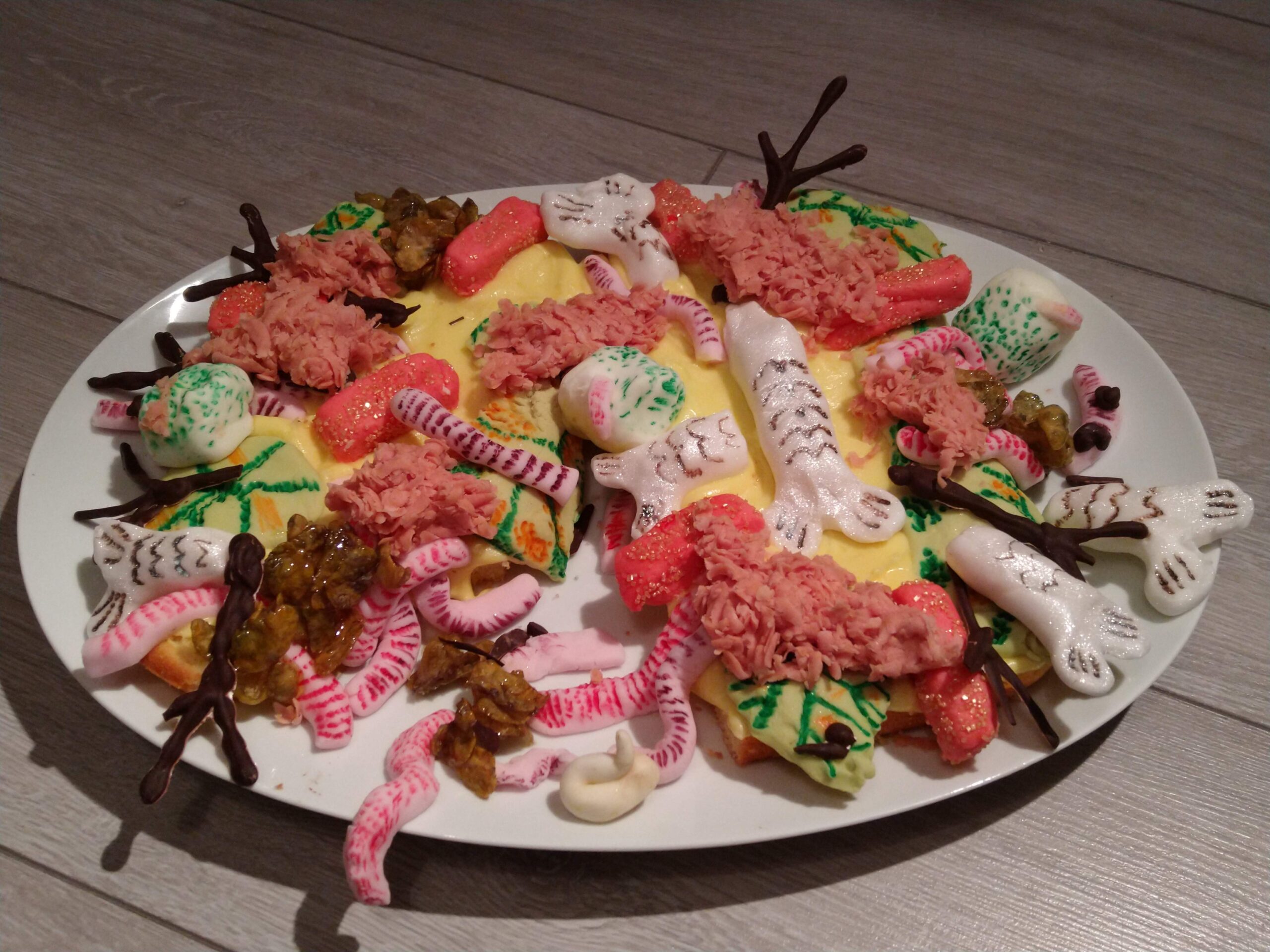
Sitting down, eating my dinner this evening, I experienced a frisson of excitement. I realised that it was Tuesday and so was a Great British Bake Off evening. Running to take my plate downstairs, I also realised I was enjoying another long-held and sorely-missed experience, that of enjoying a scheduled television programme rather than endless scrolling through recommendations and categories via an interface. Infinite control and choice creating maximum boredom and frustration.
Everyone my age and perhaps a decade younger should remember this feeling. Knowing that your favourite programme was due on television at a particular time each day or week (channelling Neighbours on BBC1 after CBBC and the pain of Blue Peter whilst you waited). Only now, that thrill is rarely, if ever, experienced. Once I fantasised about what is now viewing on demand. Not having to wait seven days for the next episode of whatever your viewing obsession was. It was simply all there, searchable and instantaneous. Something for you, whatever your mood or inclination was.
Only the reality isn’t quite all the fantasy promised.
Rather than the restriction of a schedule, now it is the constraint of the quantity you must wade through to find something, anything, decent to watch. Choice, stacked on top of options, organised into categories and recommended against what everyone else selected, now joined by AI-powered recommendations. The simple obstacle of a week’s worth of television between the episode you just watched and whenever it would next be shown seems like a minor bump compared to the current mountain we are supposed to navigate today. All decision-making is yours alone now, rather than that of a broadcaster. The point is that there are so many suggestions that fatigue and mindless engagement are the eventual outcomes, even when locked in and unable to escape.
Combining this pain with the mindless repetition of autoplay results in television viewing becoming a half-done activity. You end up missing things you actually wanted to see, like I did with the judging of the GBBO ‘Show Stopper’ whilst bashing out a first draft of this post.
Its consequence is that excellent television becomes lacklustre and predictable. The Simpsons or South Park were excellent when it was an hour a week. Back-to-back, the jokes are repetitious and whatever entertainment was offered quickly loses its joy.
I long for the days when there was actually a human voice between programmes, rather than the same advert already watched 16 times, because, along with the proliferation of television, comes the proliferation of advertising slots. Even the pause button has been colonised by adverts in much the same way that websites were when Google AdWords was still a thing. I’ve mainly excluded social networks from my life, other than the odd foray into LinkedIn – so might this be the beginning of a journey towards a new destination away from endless videos as well?
The availability of on-demand content is a bind for a neurodivergent brain like mine. Next-episode countdowns combined with cliffhanger endings and just-good-enough content keep me watching until the early hours of the morning. The tactics employed in social media to encourage dwell time and click-throughs have migrated to television, itself available in multiple formats. Streaming and user-generated content have been joined by at least one season of Dr Pimple Popper (of YouTube fame) and a dedicated Samsung TV channel of the US ‘Hoarders’, which continuously churns out seasons of people who shit in their baths because their toilet got buried underneath piles of rubbish and unopened shopping. Despite this horror, I was dragged into the alternate universe of Hoarders for about a month. I became addicted to the abominable condition some people end up in, juxtaposed with the regular advertising of US-based home clearance and storage companies. My attention, like the pause screen, was colonised and my time commodified. So I wondered tonight:
What would happen if I did away with streamed TV altogether and only watched scheduled television?
Possibly the only exception to avoiding streamed TV would be watching a movie – but I would have to choose it before accessing the streaming platform, just like you used to at Blockbusters, minus the drive into town. Treating it like this removes the power of the algorithm designed to engage attention by forever thrusting the next recommendation forward without even a chance to process what came previously.
I find that organising experiments with my time in the digital ecosystem can yield surprising and insightful results. Why I’m trying this is because I realised just how much time in my evenings streamed television is taking up, itself part of a larger project of examining how to better maintain awareness of essentials like needing to eat or move. This reflection I’m doing with Aven (a different blog post altogether) has thrown up the idea of an attentional field – developing the concept of monotropic concentration (Murray, 2018), which suggests that autistic attention is highly focused on one of several interests or foci at any one time. I’m not claiming anything beyond a dataset gathered from my own experience and analysed using generative AI; however, the work I am undertaking is beginning to reveal, in my case, a multi-dimensional and dynamic ‘field of attention’ that I have some degree of control over. This is as long as I can maintain a mindful awareness of what is pulling it away from me. Streaming television is the worst kind of haul. In order to maintain awareness of things like interoceptive sensation, my attentional field needs to sustain enough breadth, alongside the depth, to be able to notice when, for example, I’m hungry, need a drink or need to move away from my desk.
So, like the television, I have been sucked into the rabbit hole of writing this post.
This feels better though. More in control, less tugging, more directed. I have been trying for a long time to redirect my time towards more productive things like writing for pleasure again. This post isn’t seductive, well scripted or designed to make you click to the next thing. This is what I’m trying to get at. Life used to be a bit more ragged around the edges and certainly less predictable. The endless options for entertainment, adjusted microscopically for engagement (whilst often being mediocre at best), belie the gradient between excellence and the terrible. And I think we are quickly losing the ability to tell the difference.
Perhaps what I’m missing isn’t scheduled television itself, but the spaces between things. The anticipation, the interruptions, the opportunity to lose interest and do something else. A chance for something unexpected to spring up in these cracks between. I’m curious to see what happens when I let some of those spaces back into my evenings.
For now, I’m going to turn the television and this laptop off.
Murray, D. (2018). Monotropism – An interest based account of autism. In F. R. Volkmar (Ed.), Encyclopedia of autism spectrum disorders (pp. 1–3). Springer New York. https://doi.org/10.1007/978-1-4614-6435-8_102269-1